Feel the heat
Opinion by Emily Gosling Posted 19 March 2026
Most branding has to give some suggestion of what said brand is, or does, or stands for – it’s usually not ideal if they bear little to no resemblance or representation of their category, audience or ideals.
The exceptions are usually things like record covers, or other inherently creative entities like musical instruments, editorial projects; occasionally booze brands, like the perennially fabulous Departed Spirits in its utterly utilitarian petrol-can bottles; or particularly hip beauty brands.
Another exception is fashion – when the branding is done well, that is. And it certainly is done well here, on this identity for Fouta Harissa by Sometimes Always, which describes itself as a graphic design studio “and art direction practice working between São Paulo and Marseille but acting internationally… born in Brazil out of the intersection between graphic design, music and architecture”. The music stuff makes a lot of sense here, for reasons we’ll go into shortly.
Fouta Harissa is a high-quality handmade textile brand founded in Brazil in 2018 by Tunisian duo Lamia Hatira and Alia Mahmoud. Sometimes Always was brought in to work on a new visual identity for Fouta Harissa at the end of last year, working with Brazilian designer and cross-disciplinary creative Renata Sá and Marseille-based Solenn Robic, a multi-disciplinary graphic designer based in Marseille to redesign the logo.

While most of us have probably heard of harissa – a hot chili pepper paste – I for one did not know that it was native to Tunisia. Nor did I know what a fouta is: turns out it’s a traditional Tunisian towel-like garment, usually made from thin cotton or linen with a flat weave and knotted fringes and used as anything and everything from a fast-drying beach or hammam towel, to a sarong, picnic blanket, or home throw.
One reason that Fouta Harissa was looking for a branding shake-up was because of its recent changes to how and where its garments are made, moving the production of part of the foutas to Brazil. It was crucial, then, that the brand retained its visual connections to its spiritual home, and the birthplace of its founders – Tunisia.

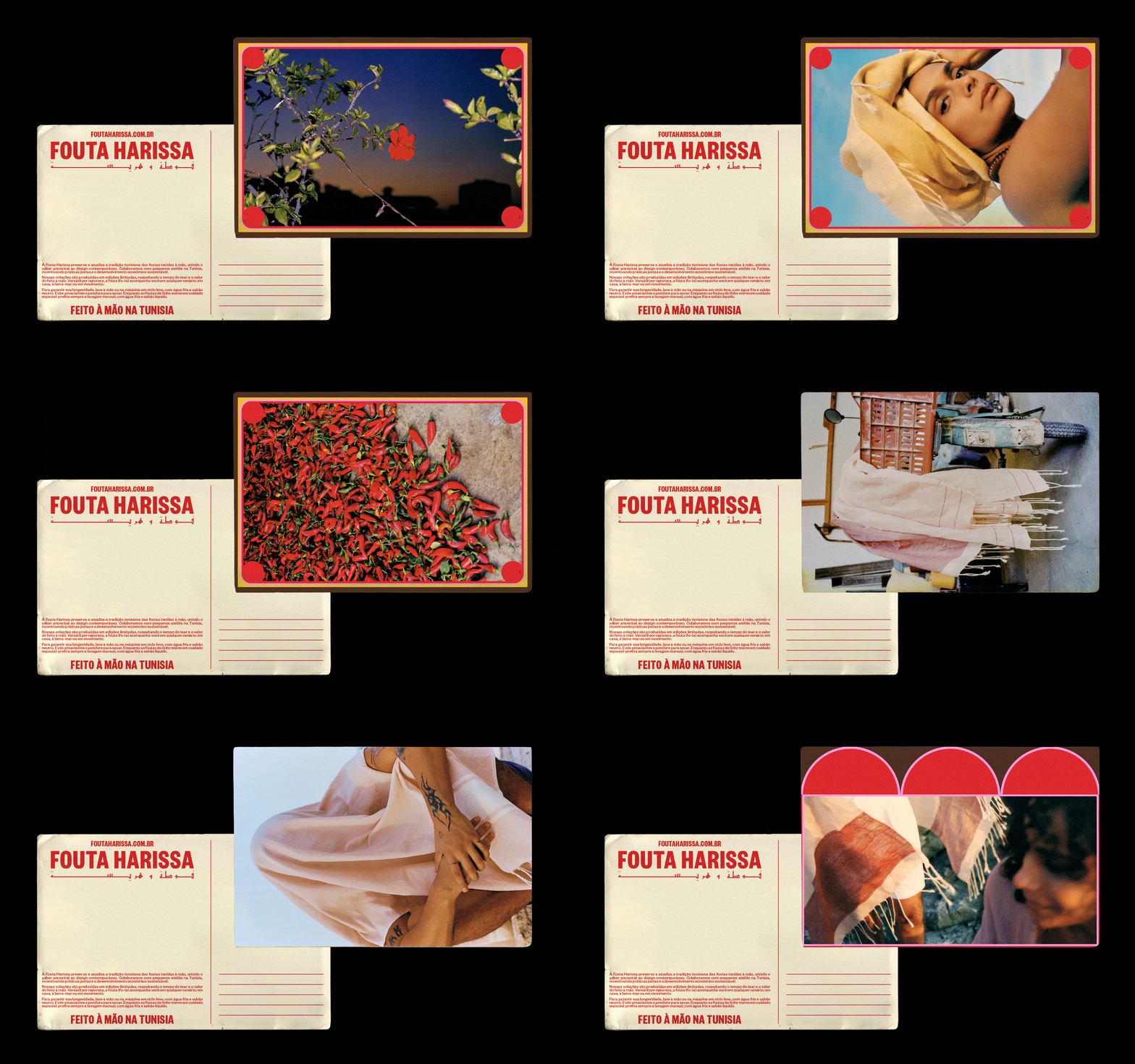
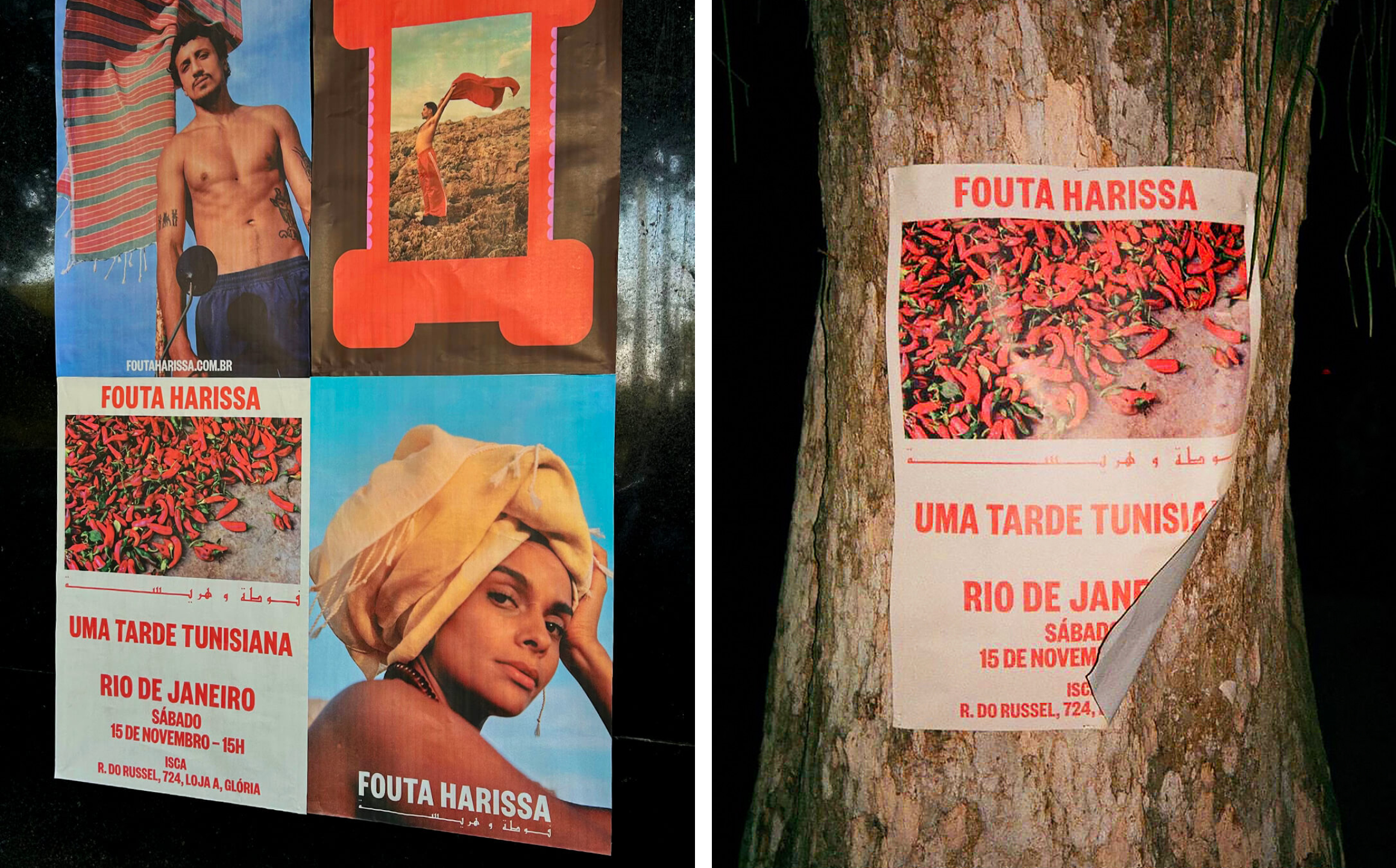
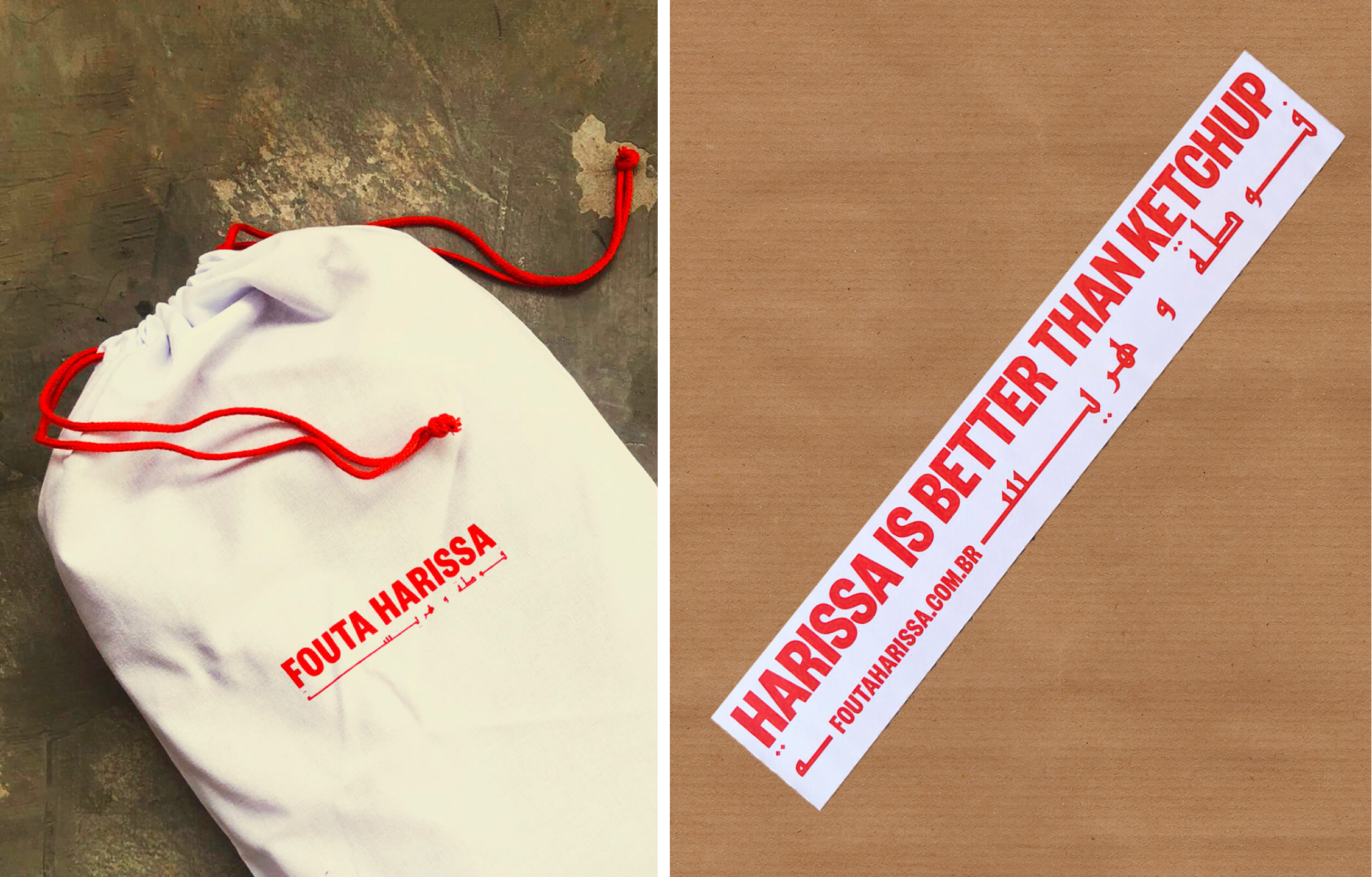
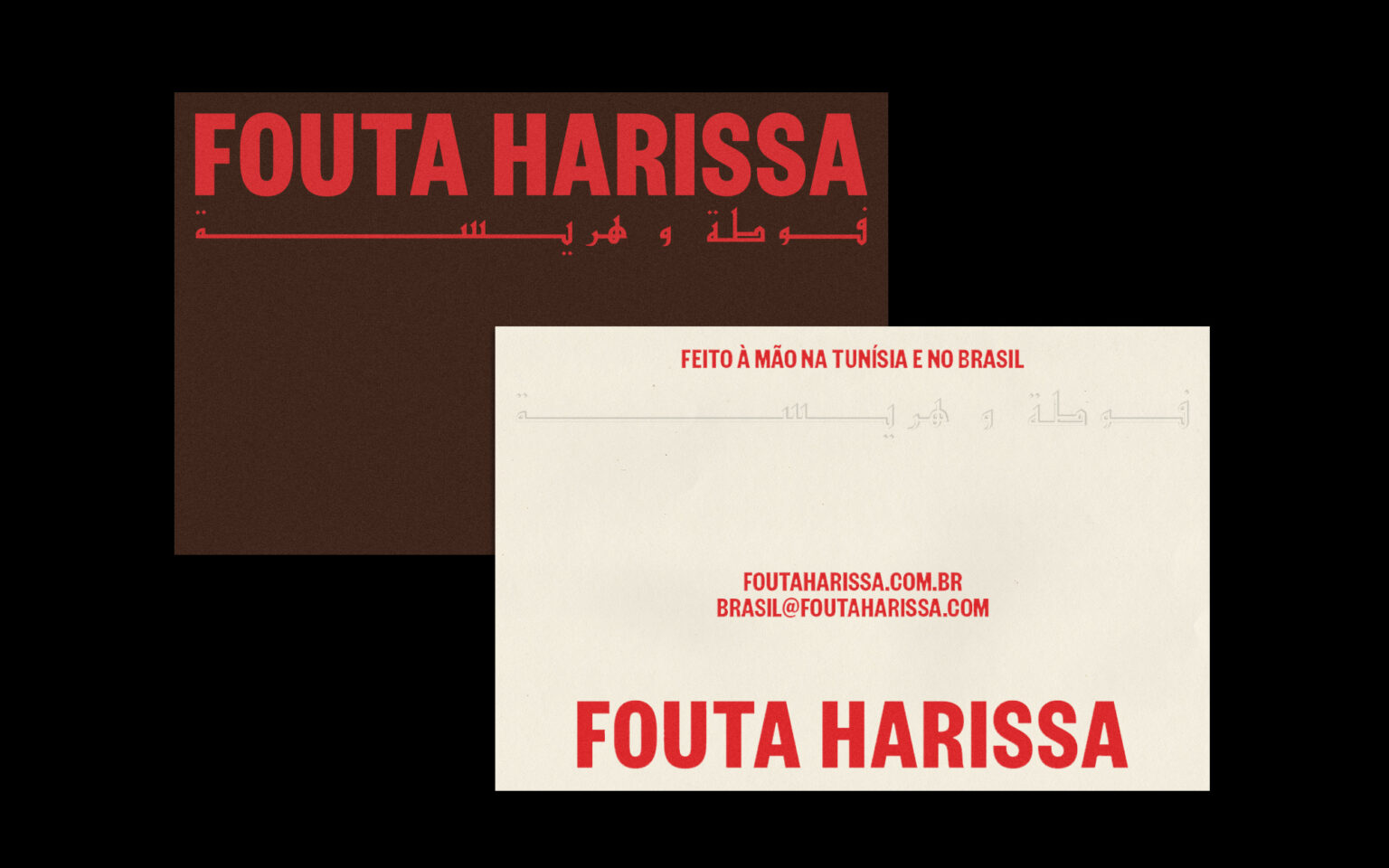
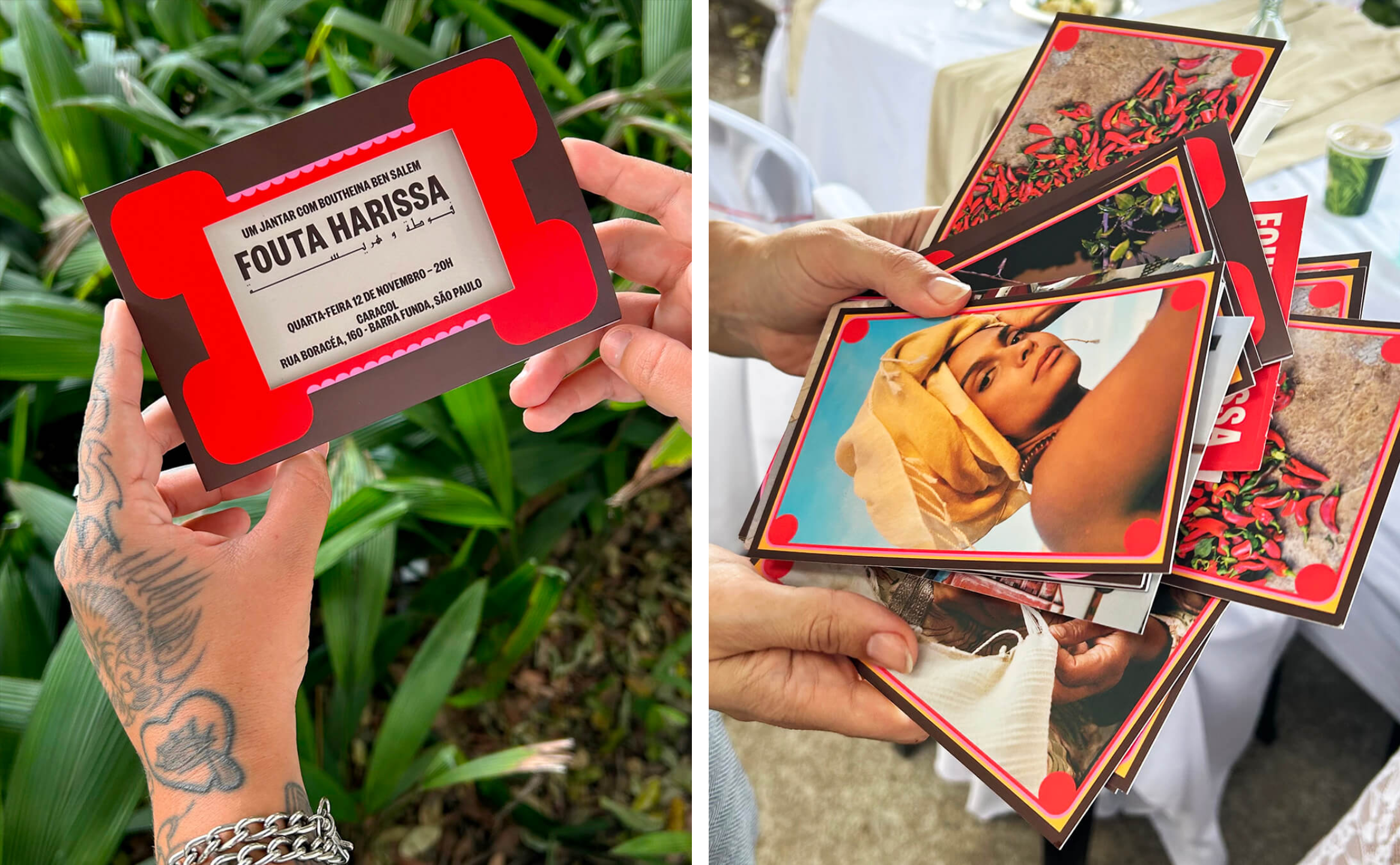
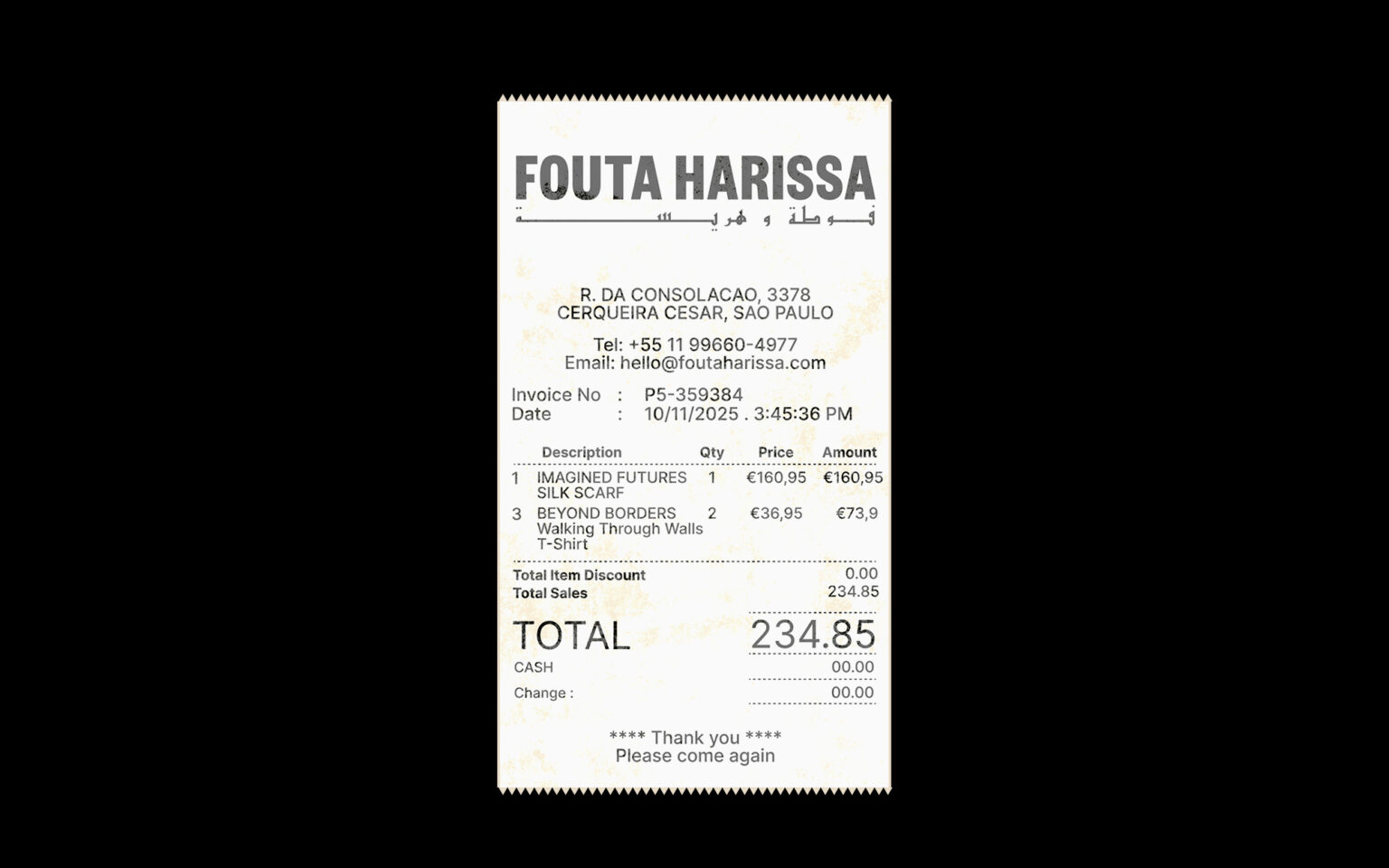
While it seems the new identity is yet to grace the Fouta Harissa website, it’s already graced street and wheatpaste posters, postcards and other printed collateral such as event invitations, stickers, social posts and more.
It’s a superb overhaul – the former branding was fine, but pretty bog standard – out-the-box fonts, a decent colour palette, everything all a bit too ‘nice’ and polite. Now, the brand is so smart that sometimes it looks like a restaurant, at others a record label – and none of that matters.
The new look, however, is super skilful; it’s totally contemporary yet heavily leaning on vintage tropes, and – just like harissa paste, Tunisia, and Brazil – absolutely radiates heat in the best possible way, it somehow gives off that sense of feeling slightly salty-skinned and snoozy and content at the end of a long, lazy, lovely day in the sun.
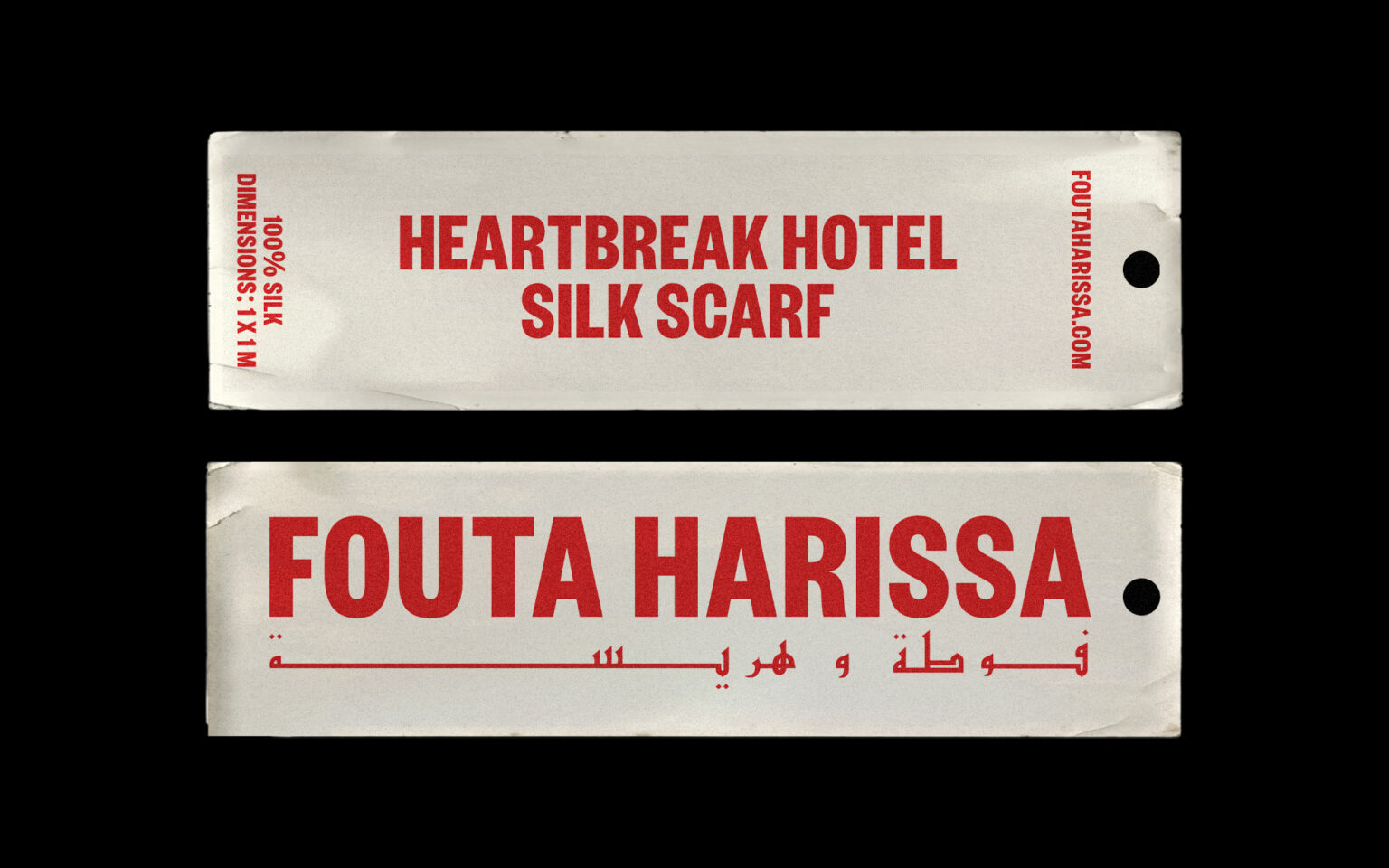
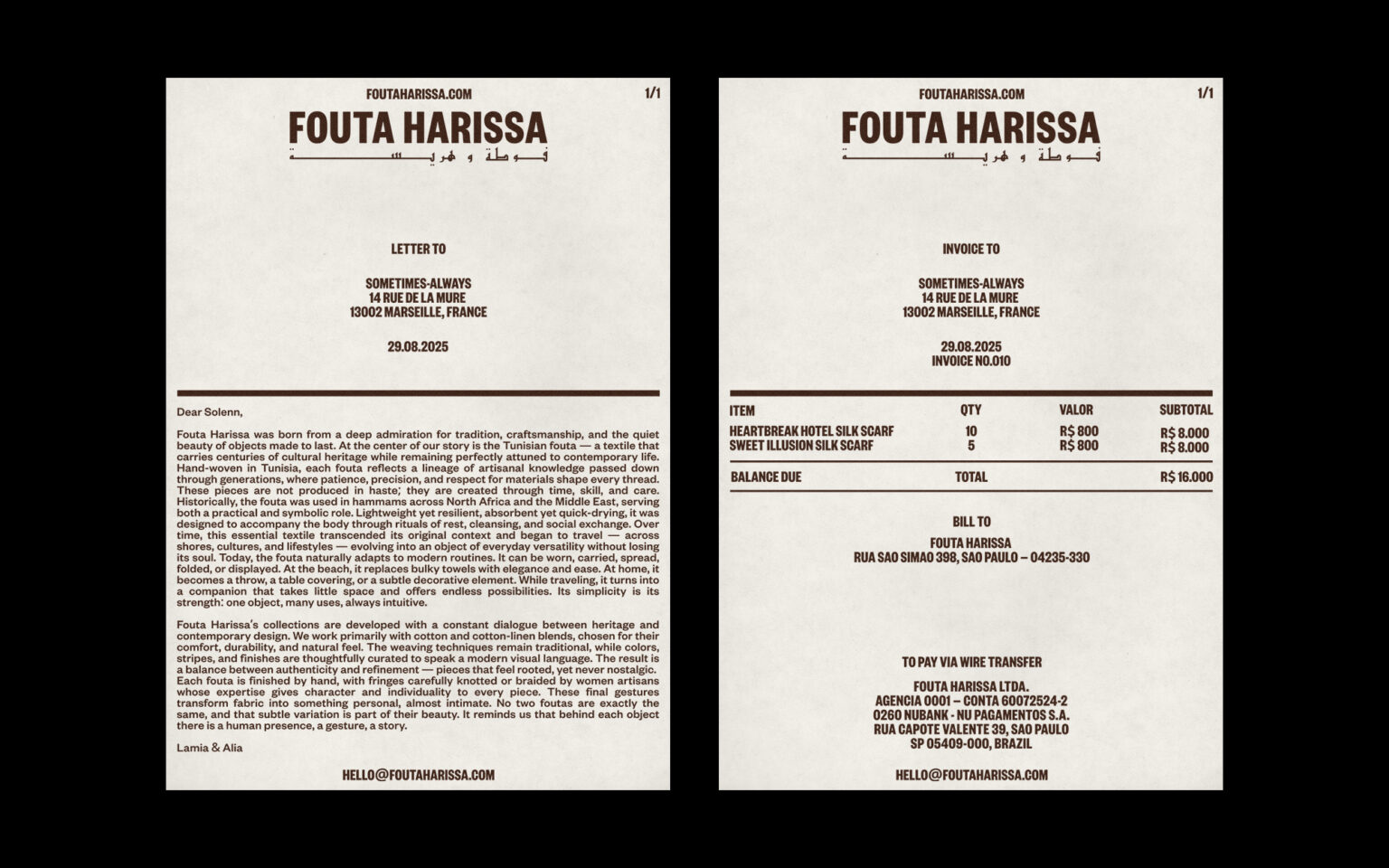
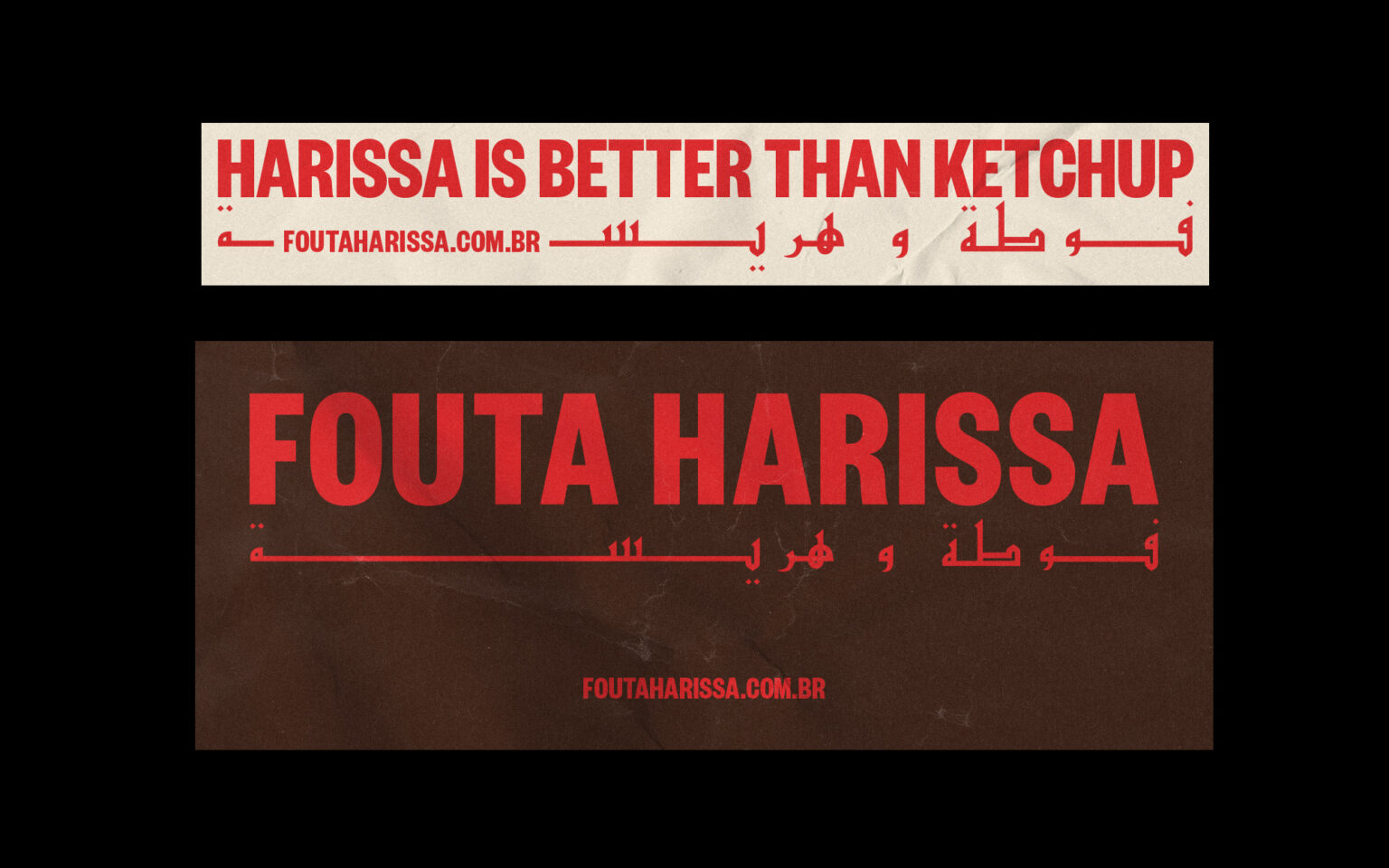
The new logo preserves the former design’s distinctive Arabic lettering, but this is now contrasted with a new narrower and bolder typeface. Part of the reason the identity feels so strong is that this is the sole typeface now used across absolutely everything: it packs a punch but without yelling or fighting for attention; it’s textured and underscores the brand’s artisanal foundations but is resolutely utilitarian and legible; it’s flexible enough to work across every single touchpoint, regardless of being physical or digital, big or small.
The redesigned wordmark is set in all-caps and in a brighter, more fiery shade of red than the former burgundy, which succinctly evokes the spice and heat of the harissa in the brand’s name. Elsewhere the colour palette all feels to radiate off from that central hue, with a mixture of earthy tones including a rich brown and vivid bubblegum pink – an unusual trio of colours but one that works really beautifully here.

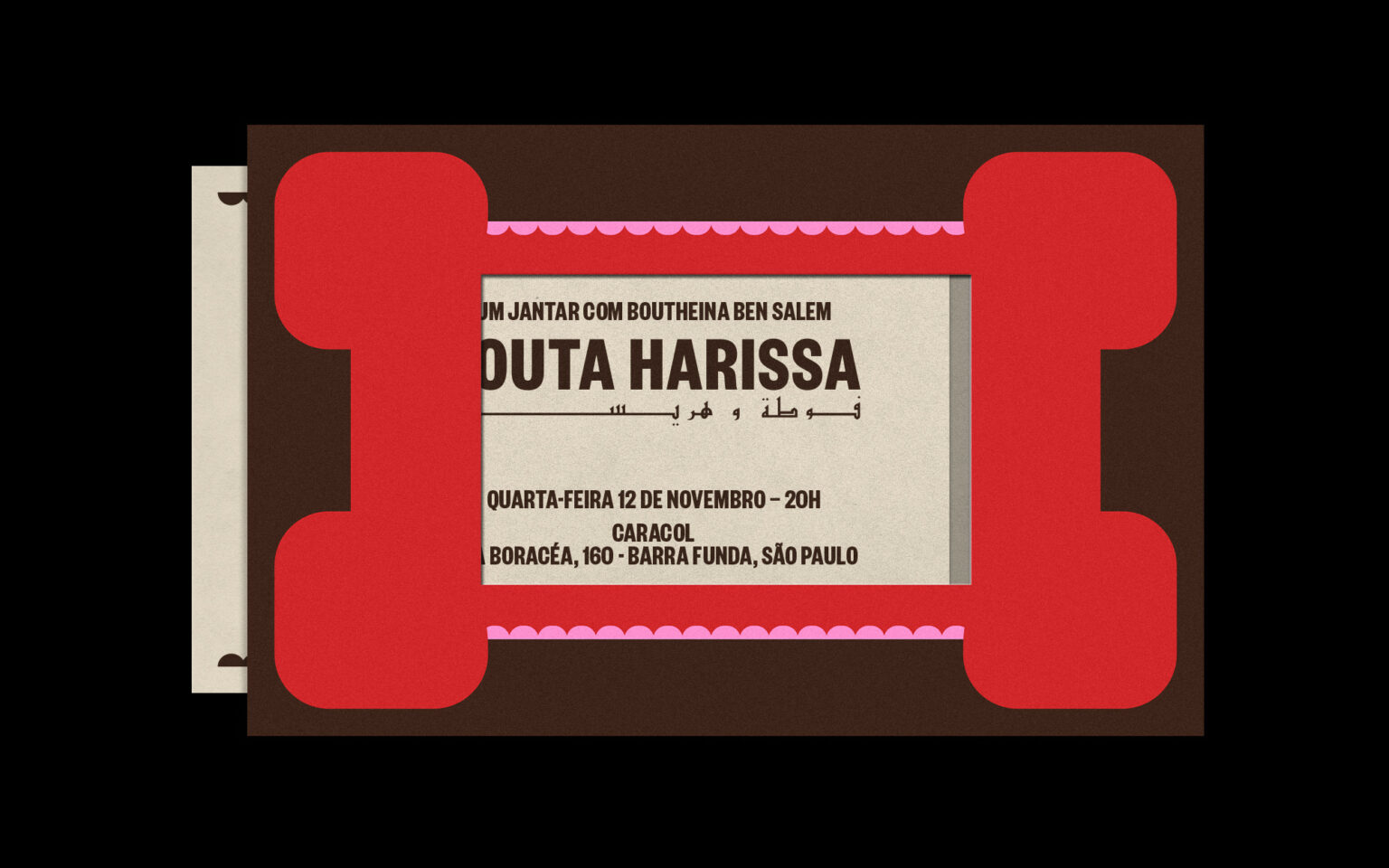
The designers have cited vintage Arab cassette tapes as a key visual reference here, and it makes sense – everything feels distinctly bedded in, nostalgic somehow – even for those of us with absolutely no interaction with foutas, Arab cassettes, or Tunisia. The cassette thing also comes across in the smart and consistent use of framing throughout the new identity: rectangles, simplified undulating borders, and layers of frames-upon-frames form a crucial but subtle part of the new identity, working as both graphic devices and literal frames for brand photography and messaging.
Aside from the reference to the cassette tapes, there’s just a very lovely analogue sensibility across the whole identity. That’s thanks to the typeface, too; but just as much a result of the gorgeous new suite of brand imagery shot by São Paulo-based photographer Hick Duarte. The art direction is masterful across the shots of not just the brand’s products and models, but more abstract or incidental scenes like Tunisian landscapes, chillis, hot blue skies.
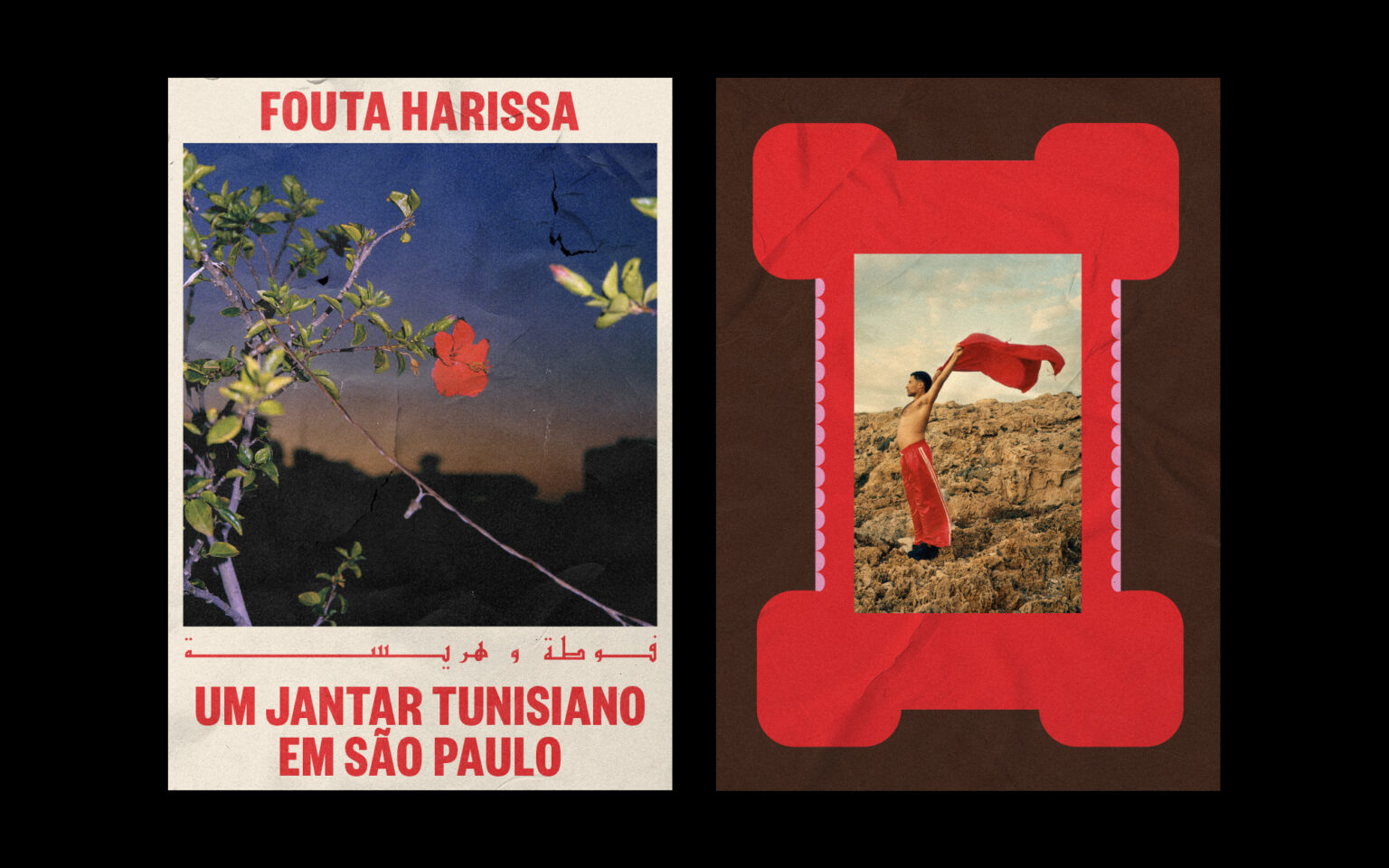
Everything feels like a postcard that’s almost sunbleached but not quite, on the verge of gathering dust but very much still with it – vintage but totally contemporary; looking back but heels dug into the here and now.
The photography, type and colours all work brilliantly together to distill what the brand is all about while never being too on the nose – the editorial feel across everything makes it unshakeably cool, in an enviably effortless way.