If you’ve visited an off-licence, you’ve heard of Lebara – now thanks to Verve, the brand finally makes sense
Opinion by Emily Gosling Posted 25 June 2026
Lebara. Le-ba-ra. It’s a word that’s become so familiar to many of us, sonically at least, as to have become almost part of the wallpaper. But semantically, conceptually, literally – do many of us really know what it is?
If you’re anything like me or the very small sample of around five to six people who just happened to be in the same room as me somewhere in north east London, Lebara, you assume, is a useful brand. Just not a brand for you, or me, or us. But it’s probably great for someone. Just no one is quite sure who.
It’s a bit like a certain swathe of confusing, yet oddly comforting off-license/cornershop staples which surely no one buys, but it’s sort of reassuring to see hanging out – a little carton of Peanut Punch, a Melody Pop or 27 toppled over in a box on the counter, a few deeply dust-coated bottles of that duo-tone creamy liqueur which I’ve just learned is called Sheridans.
Lebara, to most of us then, connotes sim card – readily available cornershop sim card. Neither convenience nor tech brand; household name nor novelty. Even GiffGaff has elevated itself beyond that over the last few years – a branding triumph absolutely not to be sniffed at – and perhaps it’s about time that Lebara should, and could, do the same.
It was Netherlands-based agency Verve which recently took on such a challenge, working on a new brand strategy, brand identity and digital design for Lebara, which it turns out can be summed up simply as a ‘mobile phone network’. The overhaul then, according to Verve, was and is a “perspective-shifting rebrand for the network you underestimated”.

And perhaps we had underestimated it: turns out the brand has a fair bit of history behind it. Lebara was founded in 2001 by UK-based Rasiah Ranjith Leon, Baskaran Kandiah and Ratheesan Yoganathan; the name ‘Lebara’ combines two letters from each founder’s surname. When it launched, Lebara’s initial product was international telephone calling cards, sold through independent mobile phone shops.
The brand has since expanded far beyond that, however. In the early 2000s, when keeping in touch with family overseas could still feel prohibitively expensive, Lebara found a sizeable audience among migrant communities, international students and frequent travellers. Over the years it evolved into one of Europe’s largest mobile virtual network operators: today it serves millions of customers, yet despite that scale has remained curiously absent from broader cultural consciousness.
That disconnect between scale and business success, and any sense of fondness or loyalty to Lebara as a specific brand, was one of the main challenges for Verve. For years the company had competed successfully on value; yet the brand itself still felt trapped in a category shorthand of budget SIM cards and airport kiosks.
The resulting repositioning reframes Lebara as a choice made by people who have figured the market out.
What’s clever here is that it doesn’t even pretend to disrupt, or be in any way disruptive – because it shouldn’t. This is a trusted brand for a reason – people just need to truly feel a sense of what it is, and what it does for them.
It’s all too easy for agencies to take something like this and feel the need to let loose, go wild, prove just how thrilling something as ‘boring’ as low-cost phone calls can be. But that’s ultimately daft: not everything has to be exciting. With brands, sometimes things just have to work – and communicate that they work. They have to state who they are, and show us why they’re so useful to us. They don’t need to go bananas.
And that’s my only real criticism here: sometimes Lebara does look as though it’s falling into that trap. I’ve no idea what the pigeon in shoes illustration is all about – it makes no sense to me at all – but perhaps it does liven up a brand identity that’s otherwise rather pedestrian, but in the best possible way.

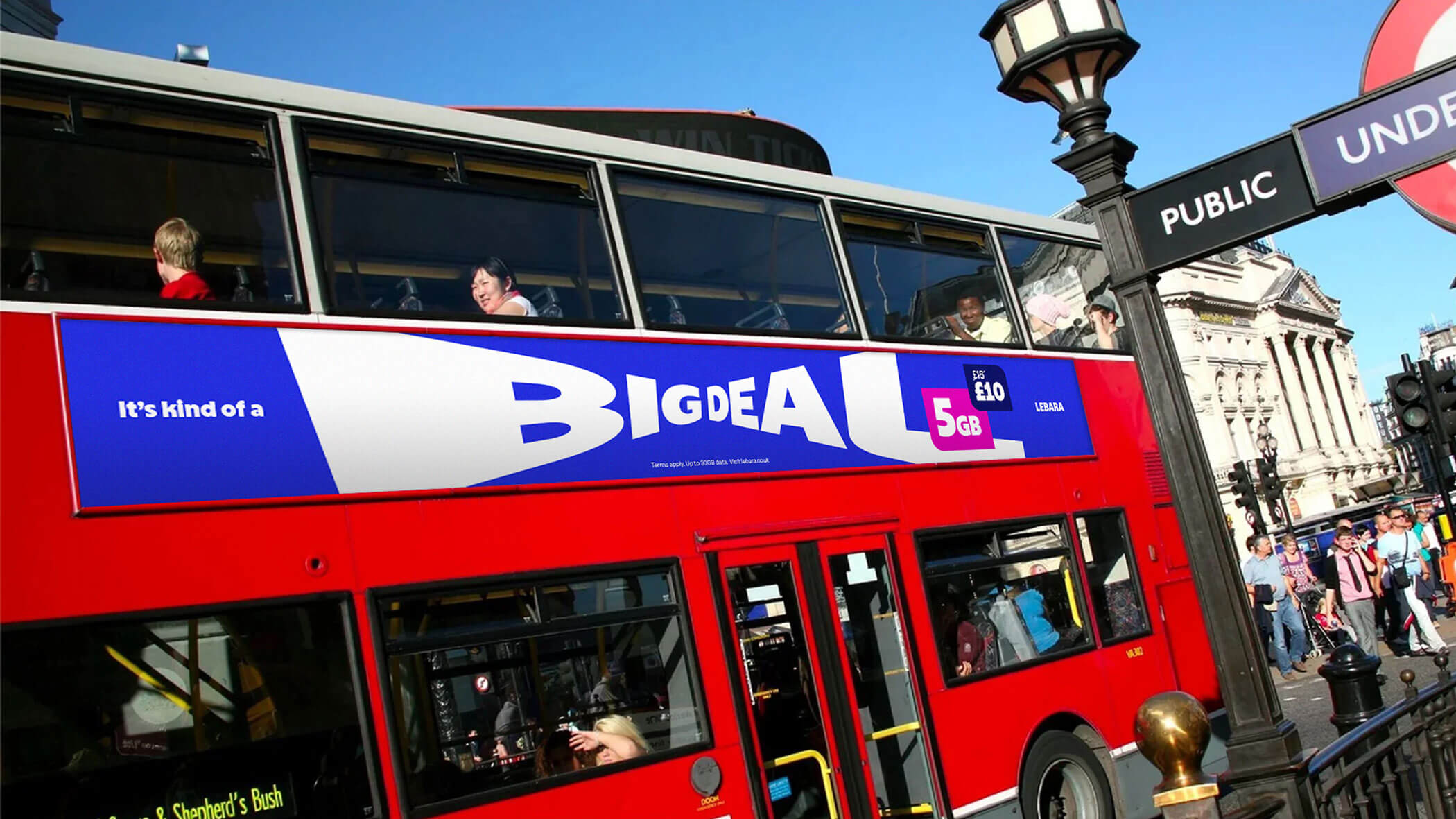
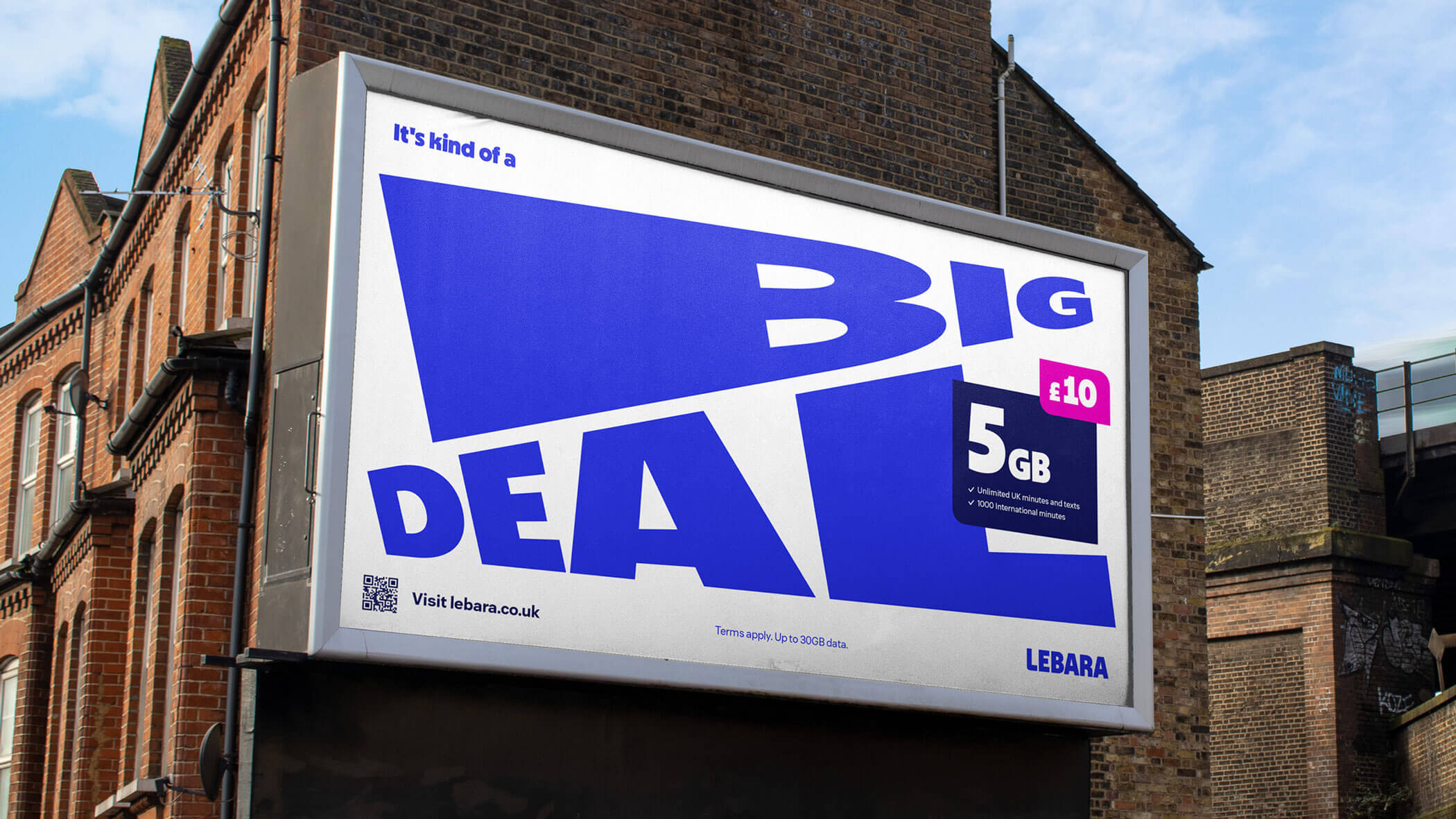
The identity repeatedly employs a handheld framing device that mimics the act of looking through a smartphone screen, creating moments where imagery appears stretched, warped or optically manipulated.
Photography is layered into parallax-style compositions that appear to shift and move relative to one another, generating a subtle sense of depth. Type is similarly subjected to distortion, skewing and perspective effects that create the impression of content being viewed through a device rather than simply placed upon it.
The result is a brand language that feels rooted in actual, real-life digital behaviour – the everyday stuff, the stuff that actually keeps you in touch with your family, or enables your PAYG phone to work, so you get your dentist appointment reminders and stuff – not the pie-in-the-sky utopian gradients that so many tech companies strive towards with increasingly little conviction. Not everything should be, or could be, ‘Shot on iPhone’.
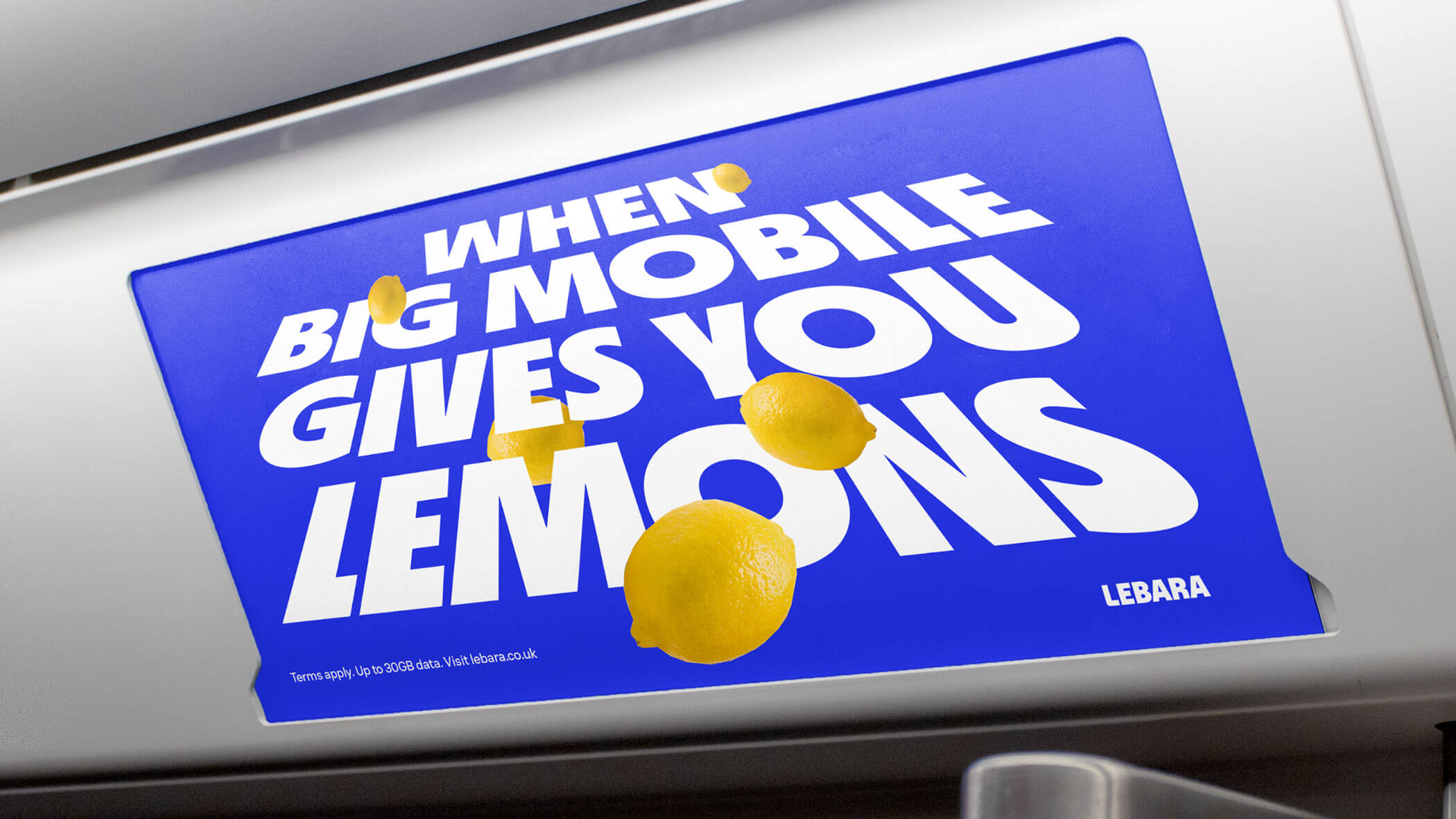
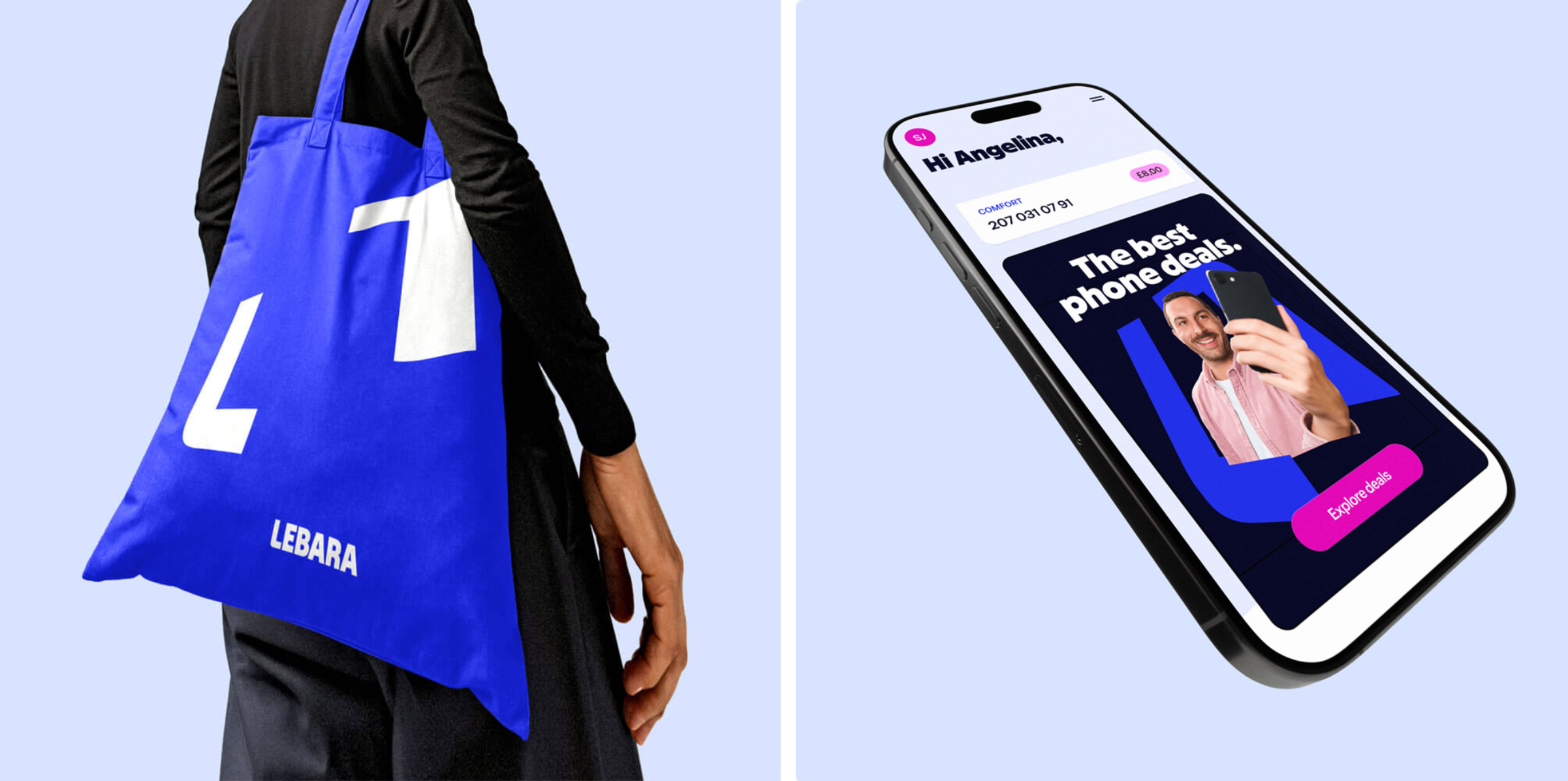
It’s an approach that works well and isn’t overplayed: Verve has kept everything neat and restrained, largely thanks to the strong, but very much ownable rich blue and white colour palette.
That aforementioned rich blue functions as the brand’s anchor, providing stability and familiarity across touchpoints. Against this sits flashes of a vivid pink shade, and the tension between the two colours mirrors the wider balance the identity seemingly attempts to strike: dependable network provider meets energetic challenger brand.
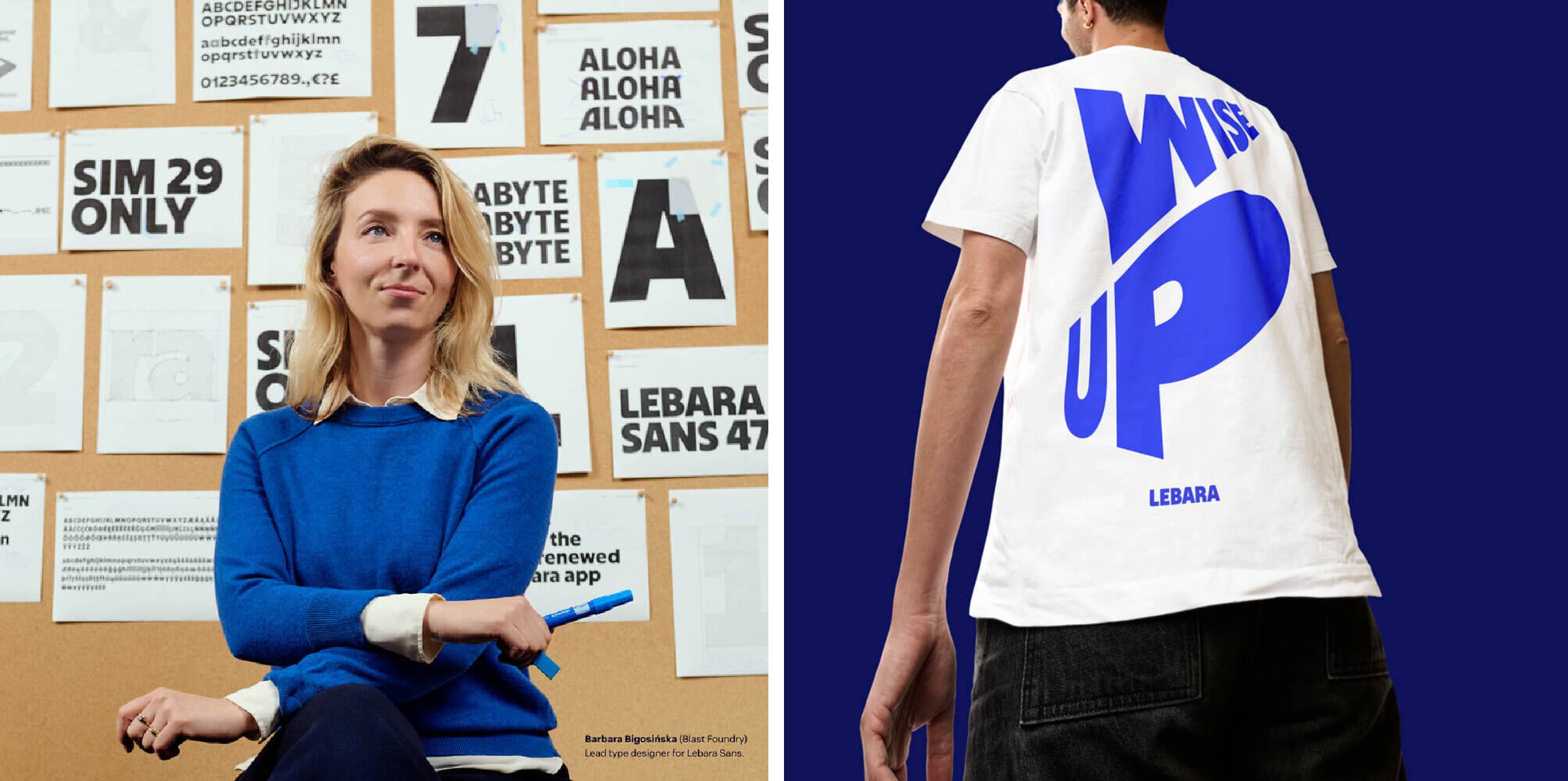
A custom brand typeface called Lebara Sans was developed alongside Netherlands-based Blast Foundry, and it’s a really nice touch that subtly, but palpably communicates that Lebara has become a brand taking design seriously. The font itself is confident, highly legible and versatile enough to accommodate the identity’s more experimental moments.
And just as should be the case with a digital brand, things really shine in motion. Verve worked with a number of collaborators to really add some nuance to the kinetic side of things: Netherlands-based creative studio Patswerk was brought in to animate the illustrations, London-based Matthew Gilbert worked on 3D design and Eddy Koek was tasked with the UI animation.
What might sound like faint praise, but it absolutely isn’t: Verve’s rebrand has perhaps finally given people something to remember. Arguably, Lebara has spent years being visible without being particularly noticeable; one of those brands we’ve all heard of, but for many of us, has connoted only the vaguest murmurings around ‘something to do with phones’.
Now, it’s pretty easy to describe the brand: not only what it is and does, but its key assets – the blue, the warped typography, maybe that peculiar pigeon. Hardly groundbreaking , but that’s the whole point – it doesn’t need to be. The best rebrands subtly show us that they know when things shouldn’t disrupt – and don’t pretend otherwise.