My kitchen has become a refuge for used packaging.
There’s a Quality Street tin full of dog treats and Gü ramekins turned into dip bowls with perfectly fitting Pringles lids.
My collection of jars staged a coup and moved out of the cupboard altogether. They now appear when friends come over as casual wine glasses. My speciality Negronis and margaritas are served in old pesto jars. Spend £16 on a cocktail in Shoreditch or Hoxton and it’ll probably arrive exactly the same way. The labels disappeared in the dishwasher years ago, but you can still tell which supermarket had the best offers just by looking at our glassware.
My husband thinks we’ve got too many jars. He may have a point, although psychologists distinguish keeping practical objects that still have a purpose from clinical hoarding. Reusing an empty jar reflects usefulness rather than sentiment. Research into reusable packaging points in the same direction. Convenience, familiarity and everyday habits shape reuse just as much as environmental concern.
Brands are beginning to recognise the opportunity. Gü actively encourages people to reuse its ramekins for dips, desserts, herbs and storage, while Bonne Maman jars have become drinking glasses, seedling pots and pantry storage. Nobody told people to do it. They simply decided those packs were worth keeping.
Industry guidance now recognises “made for a long-term home” as a valid design objective. If a pack survives many uses, its footprint per use shrinks and materials stay in circulation longer.
Luxury brands have understood the commercial value of permanence for decades. Premium spirits, cosmetics and consumer electronics invest heavily in packaging designed to stay. The challenge is making everyday packaging achieve the same outcome through usefulness rather than luxury.
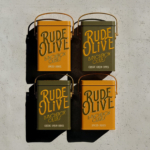
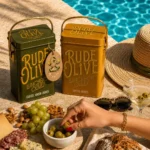
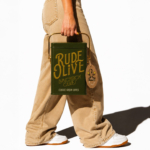
Rude Olive olives (a concept by Affogato Brand Design) come in a vintage lunchbox complete with a carry handle instead of a conventional food can. Before you’ve finished the olives, you’re already thinking about what to do with the tin.
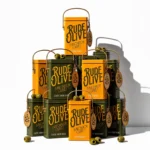
Built to survive repeated opening and closing, the graphics still look at home long after the olives have gone. It’s closer to something you’d keep on display than throw in the recycling.
The lunchbox format brings decades of familiarity. We wrote our names on them, dented them and expected them to last. That history changes how the container is perceived before it’s even opened.
Designing for a second life changes the design brief. Durability, washability, closure performance and long-term usability become just as important as graphics, shelf impact and manufacturing cost. Get it right and the reward is something money can’t buy, a permanent place in people’s homes.
Every Quality Street tin, Bonne Maman jar and Gü ramekin sitting in kitchen cupboards tells the same story. Consumers have already decided which packaging is worth keeping. Designers should pay attention.