20(Something) borrows from museum-modernity as much as tech in its new identity for civic software platform Open Point
I’ve no idea what this trend is called, or indeed if it even has a name, but I’m seeing it around a hell of a lot lately: t-shirts (usually very crisp, almost box-fresh-clean, and white) with a tonne of text emblazoned across the back. It doesn’t seem to matter at all what the text says, to means, but there’s a...

Koto gives programmer forum Stack Overflow a reason to exist in the age of AI
Since starting life in 2008, Stack Overflow has functioned as a website/platform/forum that soon became a sort of internet go-to as a shared notebook or tool guide for programmers: somewhere they can ask questions, answer them, and have them answered by other actual real life people who’ve probably been there and done that, and want to impart the wisdom they’ve...
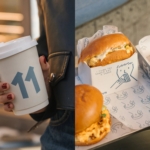
Makebardo’s charming illustrations for Cairo cafe/music venue E11VN just about rescue a rather hideous brand name
It’s never fun being negative about a project – it’s far more gratifying to show really great work, genuinely exciting or useful brands and organisations – and get under the skin of what makes them so. Obviously, a fair bit of this comes down to subjective taste; taking our own experiences and interpretations and cultural backgrounds and personalities and all...
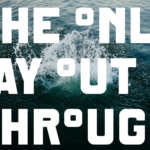
Industrial, conceptual, and starkly beautiful: DutchScot’s branding for SF sauna and cold plunge, Fjord
Fjord is a new floating sauna and cold-water plunge experience moored in San Francisco Bay’s Sausalito area. Rather than being exclusively positioned as a wellness-type experience, instead it looks to float, as it were, somewhere between architecture, hospitality and outdoor recreation. It’s a very modern take on the centuries-old tradition of saunas and how they’re used – the shift between...

Pentagram’s designs for male health brand Rugiet are unabashedly phallic, but they work
One of the more hilariously on the, er, nose identities I’ve seen in recent times here in the form of Pentagram New York’s work for Rugiet, a men’s health brand offering personalised, clinically-backed treatments sold exclusively online. Formerly better known as Rugiet Health, Rugiet was founded in Austin, Texas, in 2020 as a telehealth company. Back then, the company was...
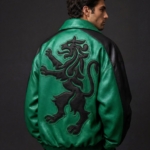
JKR overhauls football club Sporting CP by doing what it does best : plundering heritage to build a robustly simple, contemporary brand identity
JKR is perhaps – in recent-ish years at least – best known for its work with Burger King, undoubtedly one of the most oft-cited rebrands of the last decade in design circles. Then it did KFC; before that, the RSPCA, alongside a raft of other household name entities which aren’t acronyms – Uber, Boddingtons, Yahoo, Billington’s sugar. In short, hugely...
Studio Blackburn’s branding for Ellis Butchers is unflinchingly carcass-centric, yet somehow so full of warmth
As a vegan of two decades, and a squeamish one at that, the thought alone of a “whole-carcass butcher business” makes me feel rather queasy – so it’s a testament to Studio Blackburn’s incredible skill that despite my personal nonsense, I absolutely adore this branding project. And I love it not in spite of things like the utterly unflinching, raw-flesh-laden...
Exemplary brand collabs don’t compromise: the joyful designs for Midnight Hotdog ‘dog fur mist’ by SMLXL
Back in February, we covered a project that was so delightful I still think of it often (not least thanks to its utterly ridiculous, ingenuously earwormish jingle): HotDog, with its branding by SMLXL. There was, and is, so much to love about this identity: there’s the logo formed of two dogs, one sniffing the other’s bum, reduced to its most...
If you’ve visited an off-licence, you’ve heard of Lebara – now thanks to Verve, the brand finally makes sense
Lebara. Le-ba-ra. It’s a word that’s become so familiar to many of us, sonically at least, as to have become almost part of the wallpaper. But semantically, conceptually, literally – do many of us really know what it is? If you’re anything like me or the very small sample of around five to six people who just happened to be...
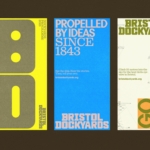
How & How takes a smart, bright collage-based approach to overhauling Bristol Dockyards
For those outside of Bristol, it’s all too easy to assume that the city is merely a place where Triphop and Dubstep were born; a Mecca for trustafarian types on a perennial ‘gap yahhh’ wearing those trousers that make people look as if they’ve had some sort of toilet issue; a place where the streets are paved with ketamine and...
Base’s brand for smalltown ’80s seafood spot Ray’s is a masterclass in earnestness done well
It’s always a joy to see an international design agency lavish the same respect, care, and craft on a relatively unknown, thoroughly local, but much-beloved brand as they would on, say, a household name product or world-renowned institution. And that’s exactly what Base Design (Kanal, 4P’s, The Huntington) – which has outposts in New York, Brussels, Melbourne, Geneva, and Saigon...
Studio Gruhl’s Global Hypercolour-esque brand identity for Rerun looks to “see what robots see”
Rerun is described as “a unified data layer for physical data that helps teams build smarter robots” which consists of two parts: Rerun SDK, “an open source library and tools for logging, storing, querying, visualising, and training on multi-rate, multimodal data”; and Rerun Hub, a “data catalogue and backend for large scale storage, access, and streaming of robotics data from...