Off-kilter and elevated
Opinion by Emily Gosling Posted 28 April 2026
St Paul’s Cathedral is undoubtedly one of the most iconic, recognisable landmarks of London’s skyline: its vast dome, all beautiful copper-tarnished turquoise, resplendent with dazzlingly golden pineapples (one of its architect Sir Christopher Wren’s favourite accoutrements, and back in the 17th century a distinct status symbol representing all that was bountiful and exotic).
Until 1963, St Paul’s was the tallest building in London – hard to believe now, with the dominance of the likes of the Shard, the Walkie Talkie, the Cheesegrater, and various other architectural beacons with daft names, but that was partly deliberate. Stood directly opposite the cathedral is what’s now the Tate Modern – originally Bankside Power Station, which promised to be a “cathedral of power” when it was conceived in the 1940s.
Back then, the architect was highly reverent to its neighbour across the river, St Paul’s, deliberately capping the height of the tallest of the Power Station’s chimneys at 99 metres compared to the 111 metre-high cathedral, apparently quipping that the decision was based on the notation that the “hundreds are reserved for the gods”.
That is, until rather shortly after its completion it was widely realised that actually burning a ton of fossil fuels slap bang in the middle of central London wasn’t the wisest idea, and it was closed down until Herzog & de Meuron’s remodelling of the site into the Tate Modern, which opened in 2000.


There’s so much to say about St Paul’s and its storied history: a pre-Christian site of worship for Diana, goddess of the Moon, fertility, hunting, and loads of other stuff! The spot where they accidentally stored loads of art and books during the Great Fire of London, but it burned down anyway! The site where ill-fated icon of gay and ally culture Princess Diana married Charles!
The last of those facts (re. The People’s Princess, Queen of our Hearts, and so on and so forth) feels apt here, since this piece should in fact be discussing the new brand identity for St Paul’s by Domenic Lippa’s team at Pentagram London – the studio refers to it as “the London landmark known as ‘The People’s Cathedral’.

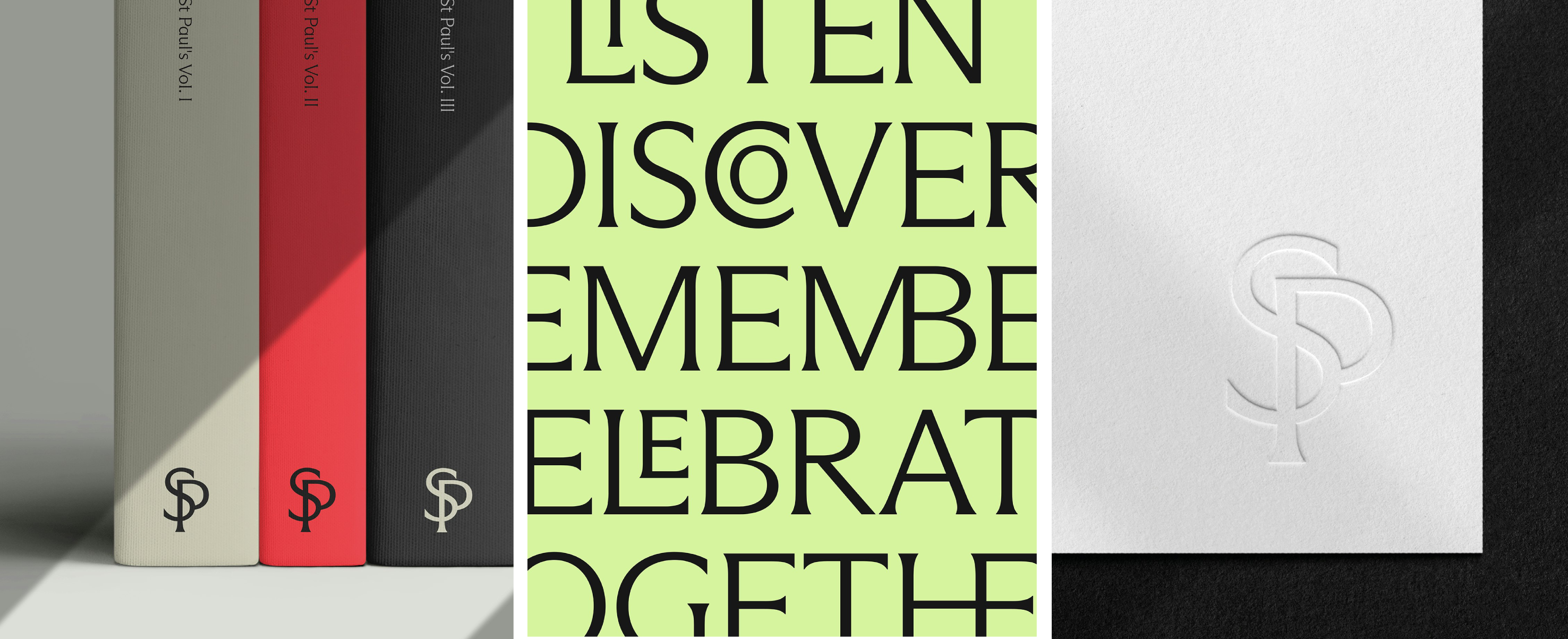
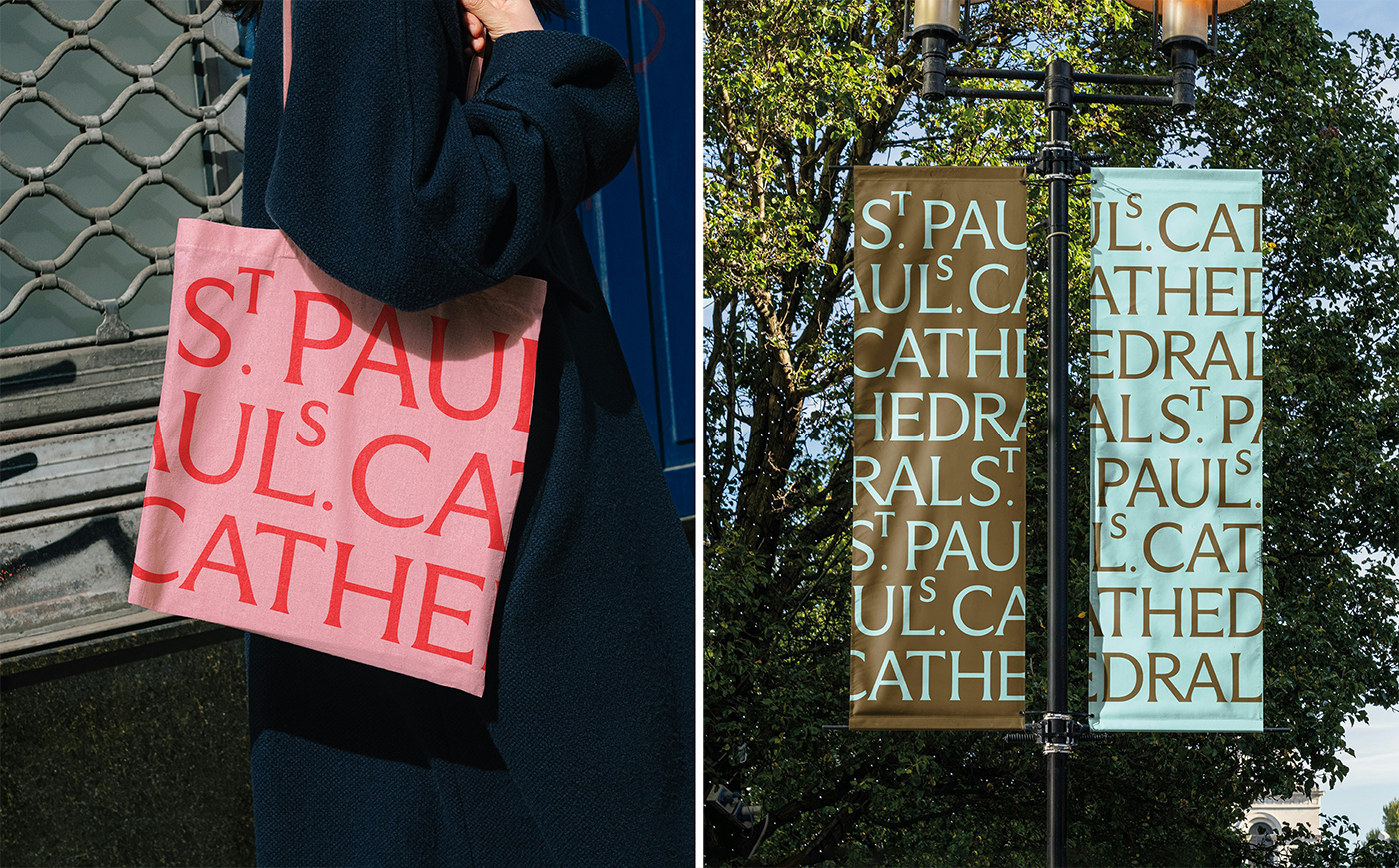
You don’t really think of these sorts of sites as having a brand identity, or necessarily needing one, but of course they do. There’s been some real standout design work in recent years for religious buildings (such as the much-lauded Hackney Church identity by Omse, and a really lovely identity for New York’s St John The Divine by Brooklyn agency Selman); it makes sense that now is the time for St Paul’s to also have a wee shakeup when it comes to its branding.
Pentagram (Natural History Museum, Super Peach, Cohere) was brought in to work on the project having been approached by St Pauls on the strength of its work for The Book of Kells Experience and Jane Austen’s House. The agency says that the main thrust of the brief was about creating a new identity that would help St Pauls “articulate its vision for the future: To inspire faith, welcome everyone and be a cathedral for London and the world”.
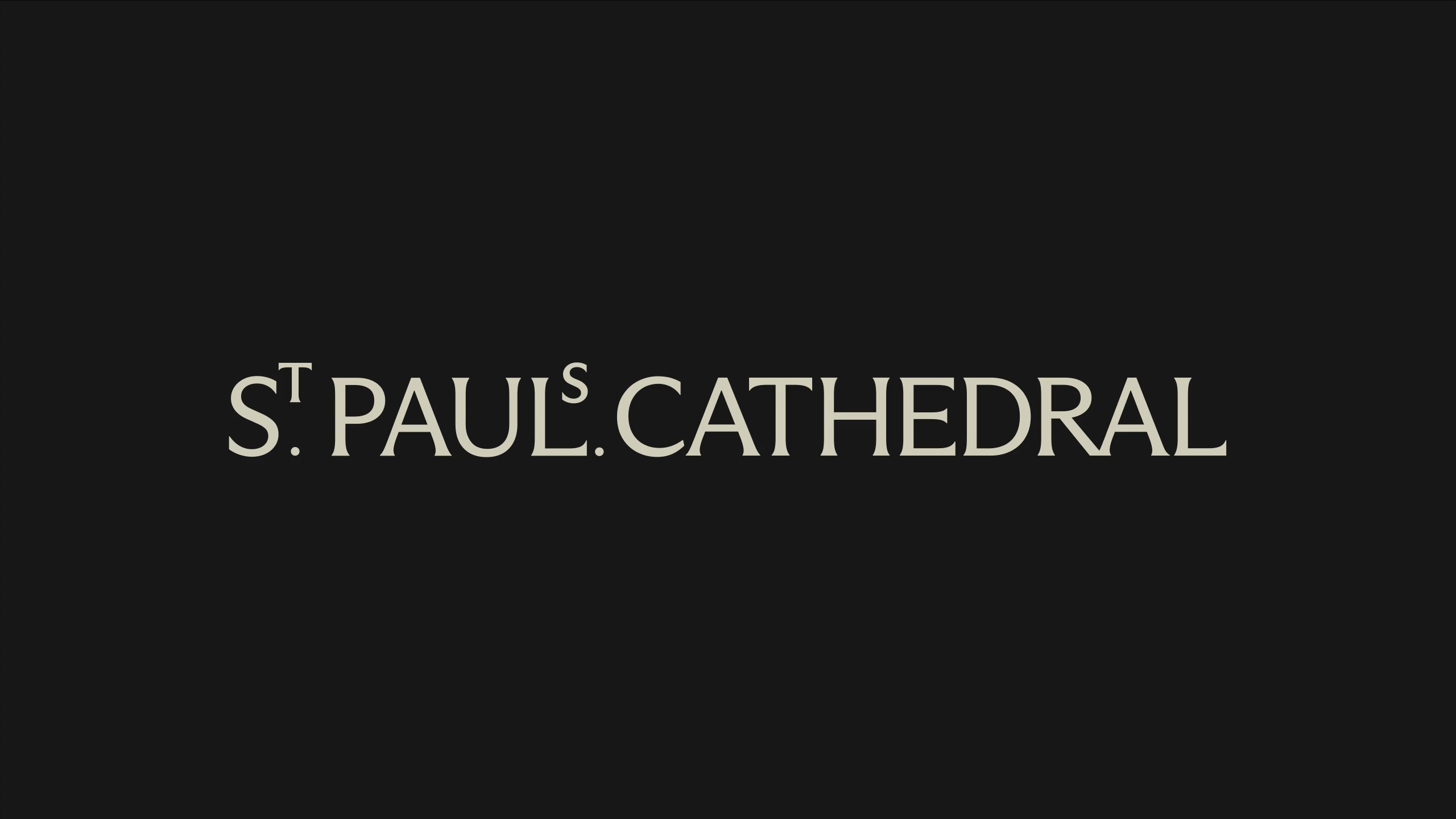
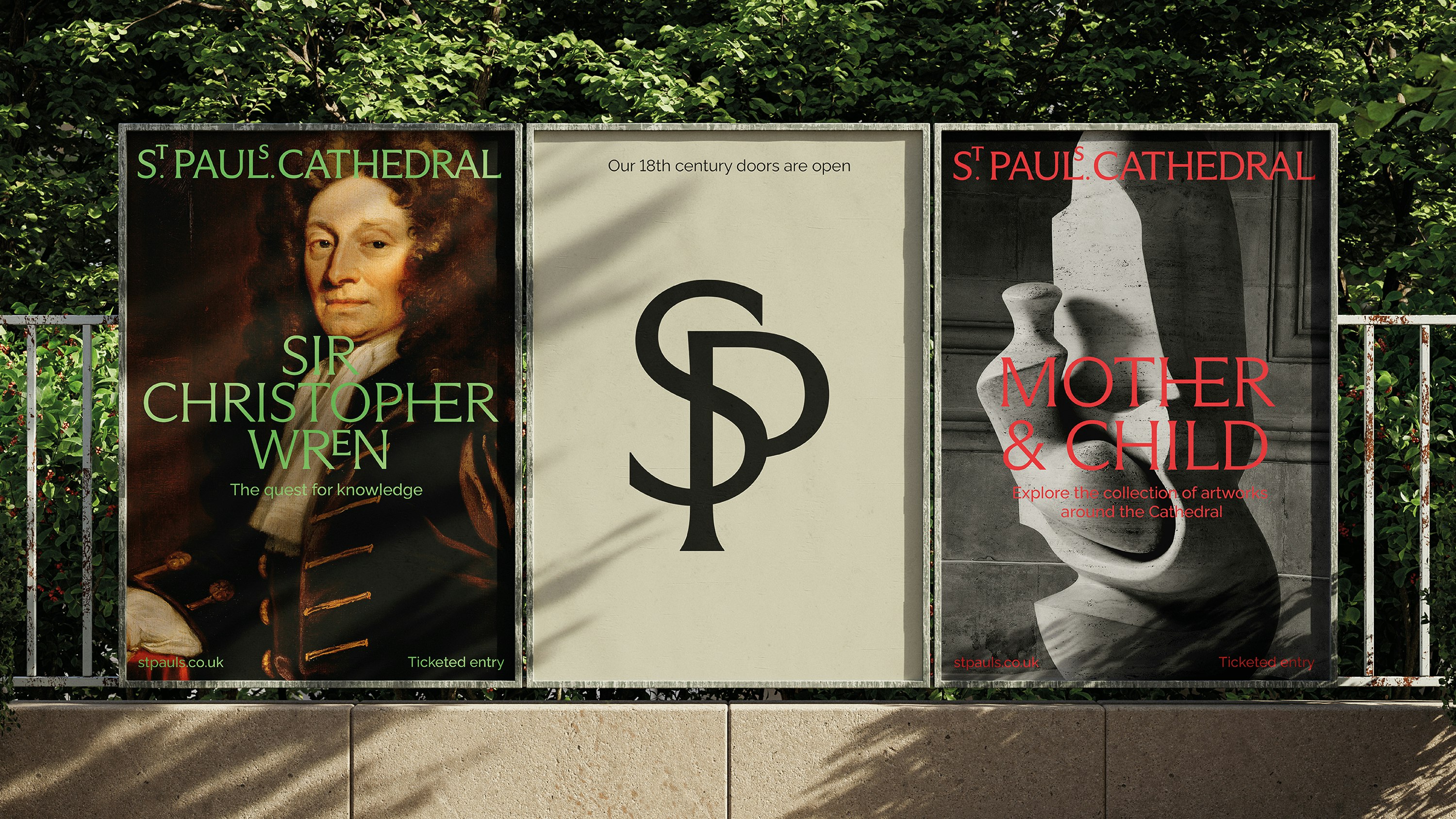
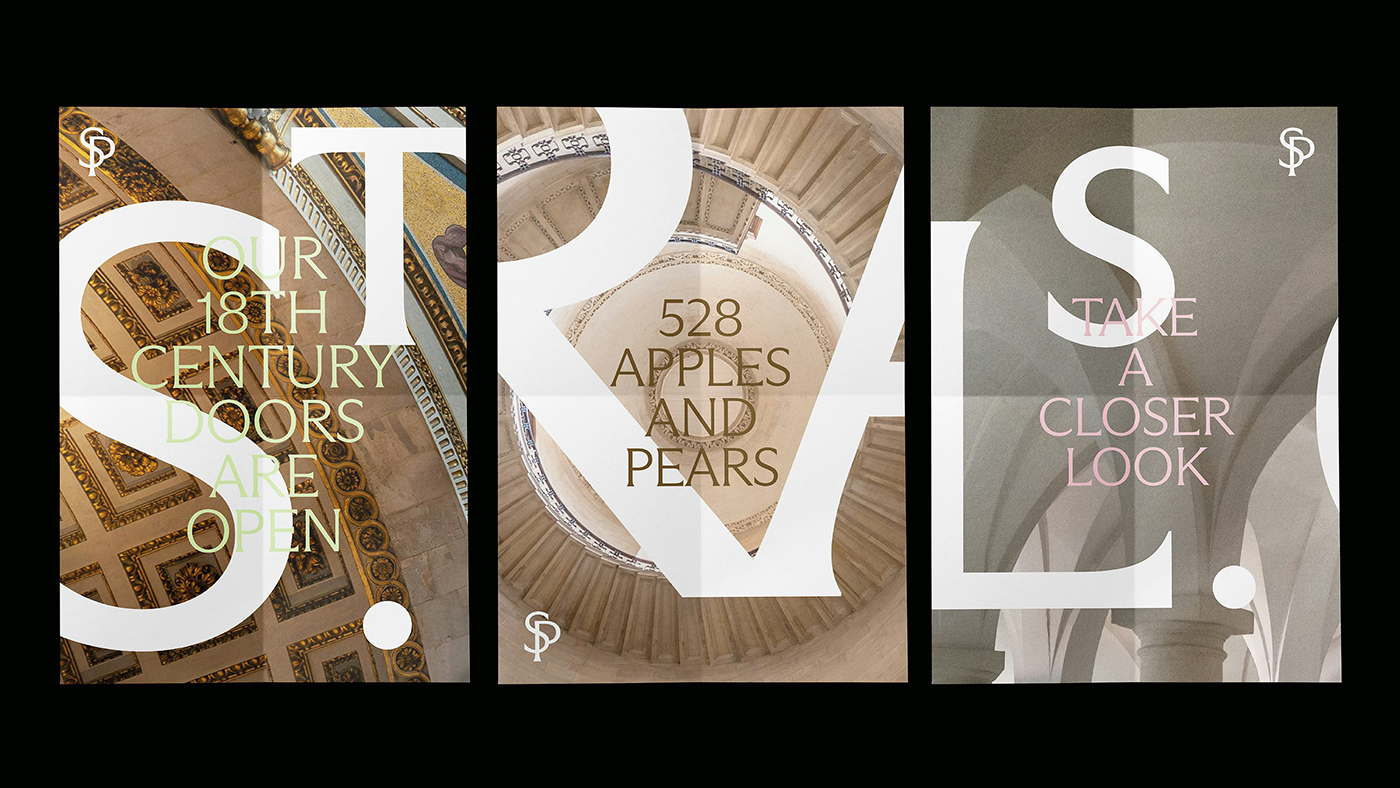
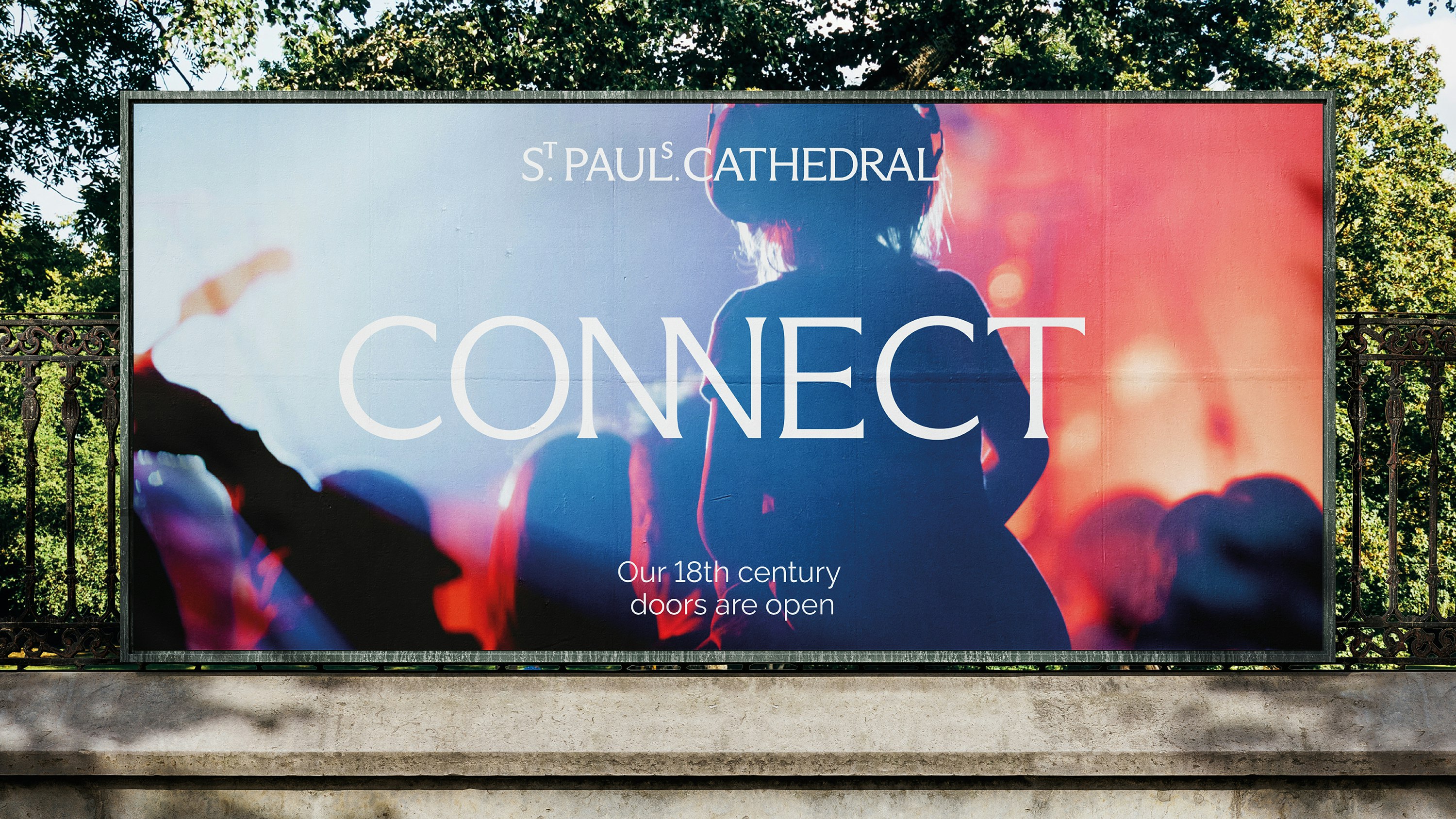
What this identity does really well is merging the cathedral’s heritage – and obviously its status as a building that’s wholly centered on religion – with a sense of a far broader cultural resonance, both historical and contemporary. The new brand design is super skillful in that marriage: if you’re looking for it to be a site of Christian worship, you aren’t disappointed; if you’re not, it’s so subtle that it’s barely a whisper, instead communicating itself as a modern entity with a modern brand to match.
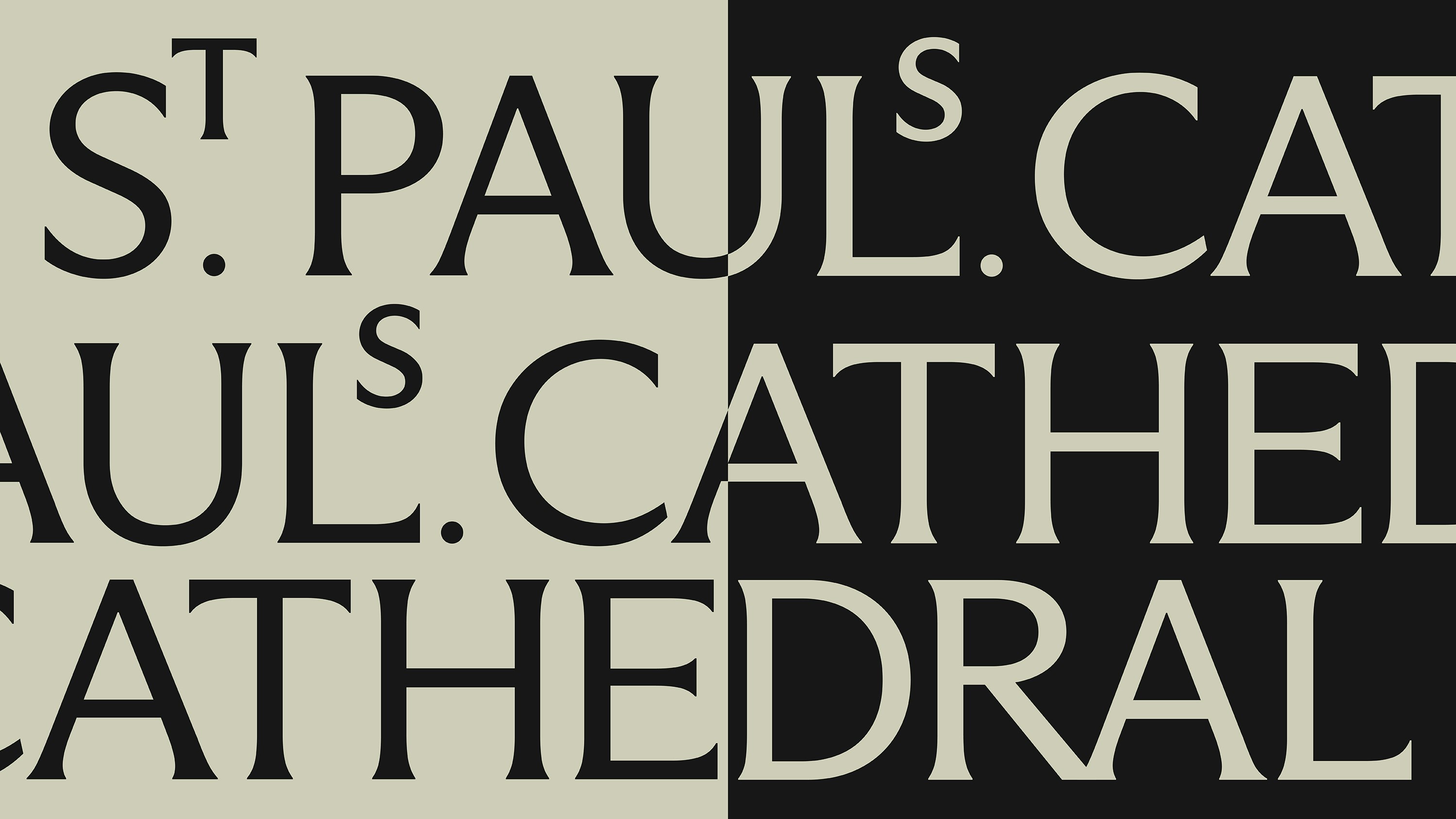
The seamless conjunction of traditional and contemporary is largely thanks to the gorgeous new wordmark, which for lettering nerds very obviously leans on the beautiful linework forged from chisels and stone and all that’s craftman-like.
But what makes it stand out and not just be a lazy take on stone-cutter-derived fonts, which are – and have been for centuries – two-a-penny, is the super simple, but brilliantly effective: that off-kilter elevated ‘S’ and ‘T’.

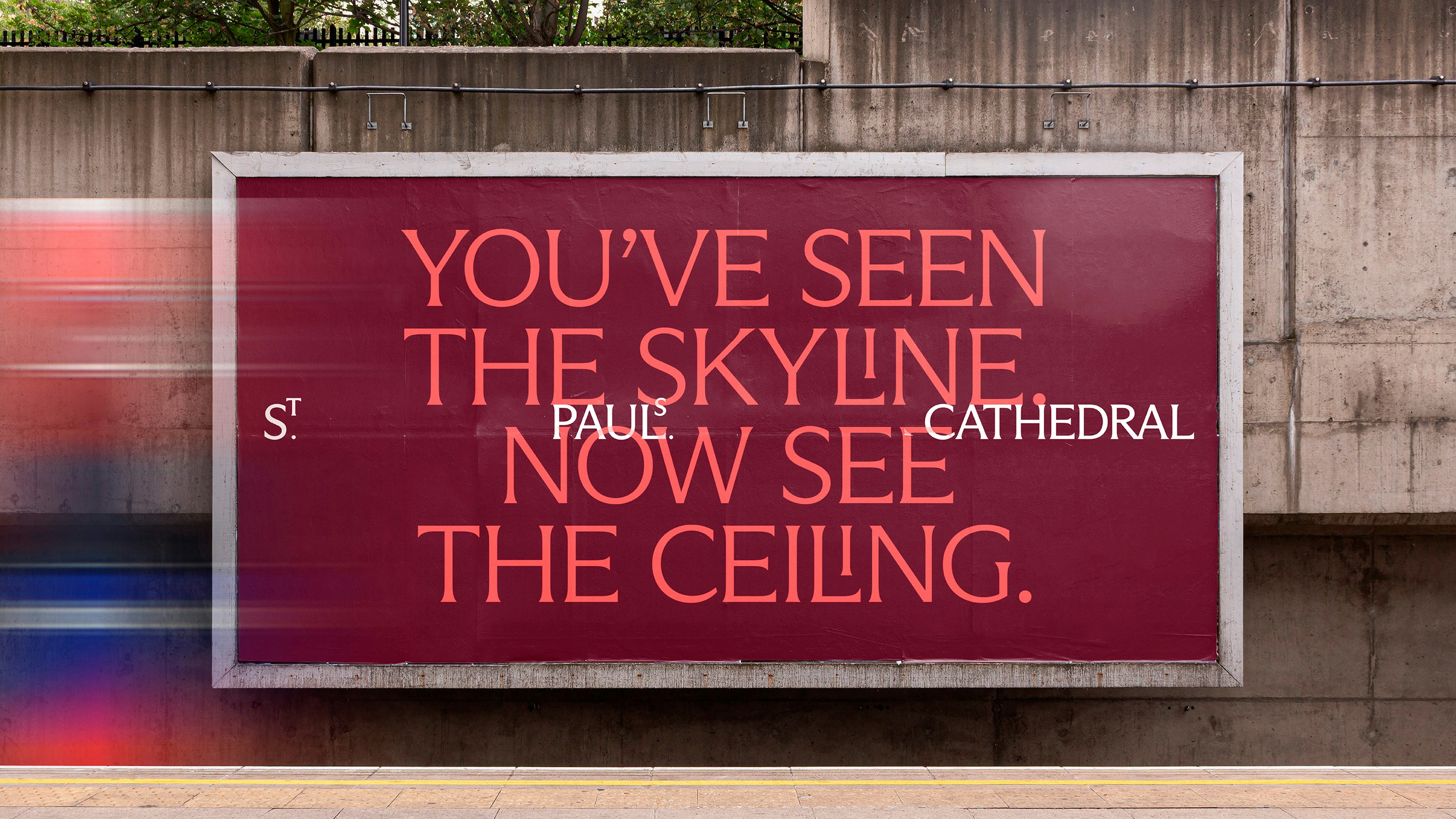
As is shown in the video above, that particular aspect – which works so well not just aesthetically but also in terms of circumventing the often-tricky, and frequently cocked-up problem of incorporating mid-logomark full stops and apostrophes.
The wordmark not just riffs on, but almost wholesale pilfers from, a particular design unearthed during Pentagram’s deep dive into the cathedral’s history, “drawing inspiration from both above ground and beneath it,” says the agency. “Letter engravings and carvings throughout the building and in the Crypt revealed historic references and typographic details that informed the new wordmark’s design.”
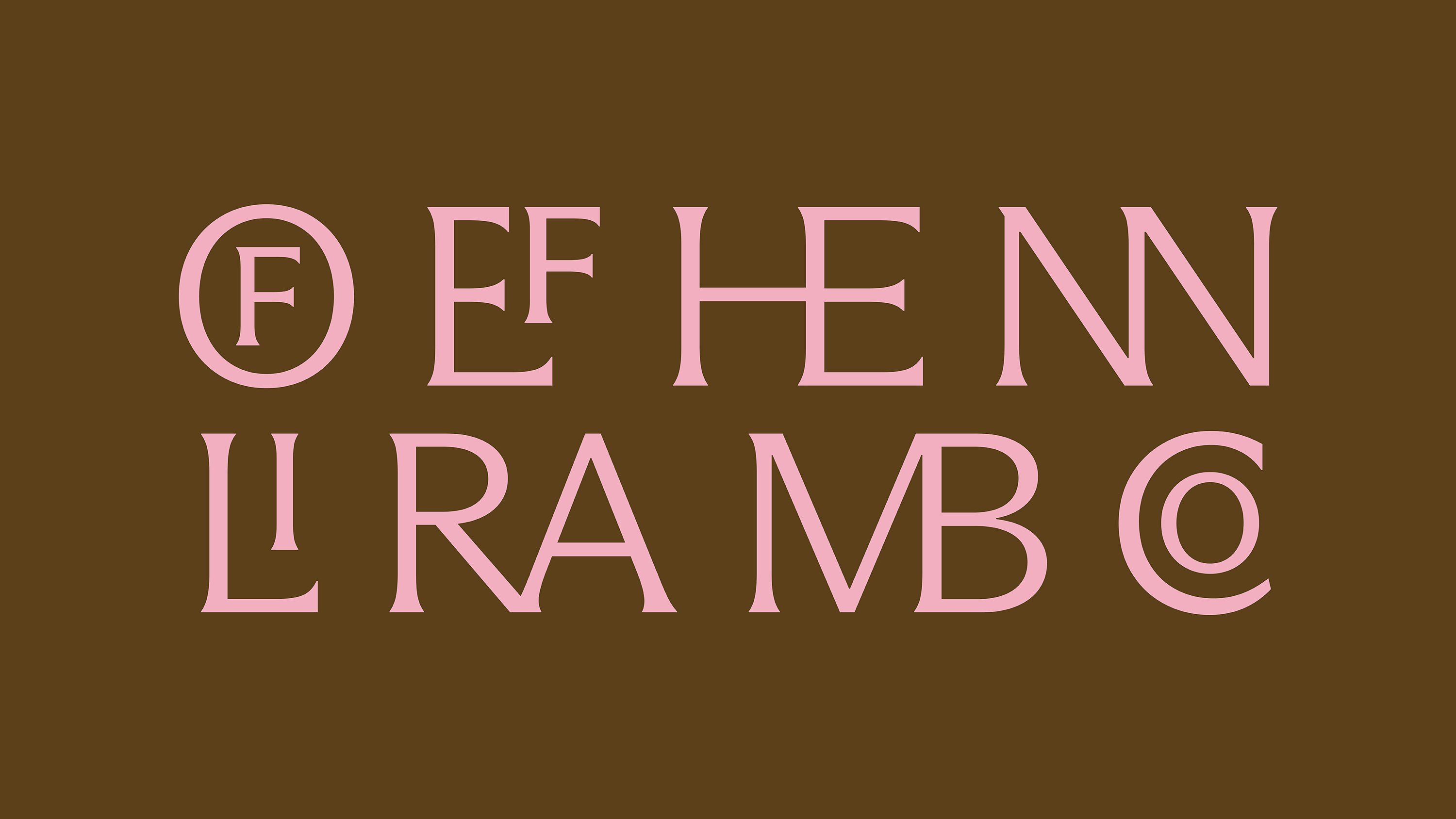
As such, that lovely ‘S’ and ‘T’ detail are directly nods to some typography found in a book from the Cathedral’s Library. To articulate this as a wordmark both in 2D and tangible, 3D forms, Pentagram worked closely with St Paul’s own stonemasons, “respecting the authenticity while allowing a modern wordmark to be realised with precision and craft,” says the studio. “This collaboration and experimentation, combining contemporary design with historic craft skills, led to the final wordmark.”
The wordmark looks sublime in that almost-black and grey-white combination (shown at the top of this piece), where the letterforms and layout seem to veer in and out, over and under one another; but throughout the identity the colour palette is surprisingly sprawling.
What keeps it all in check though is the pairings: hues aren’t used all everywhere all at once, rather they’re kept to a discrete set of duos that largely share their sensibilities – such as red on pink, duck egg blue on navy, maroon on pillar-box red. All of these colours were apparently drawn from elements that already existed within the fabric of the building of St Paul’s Cathedral itself.
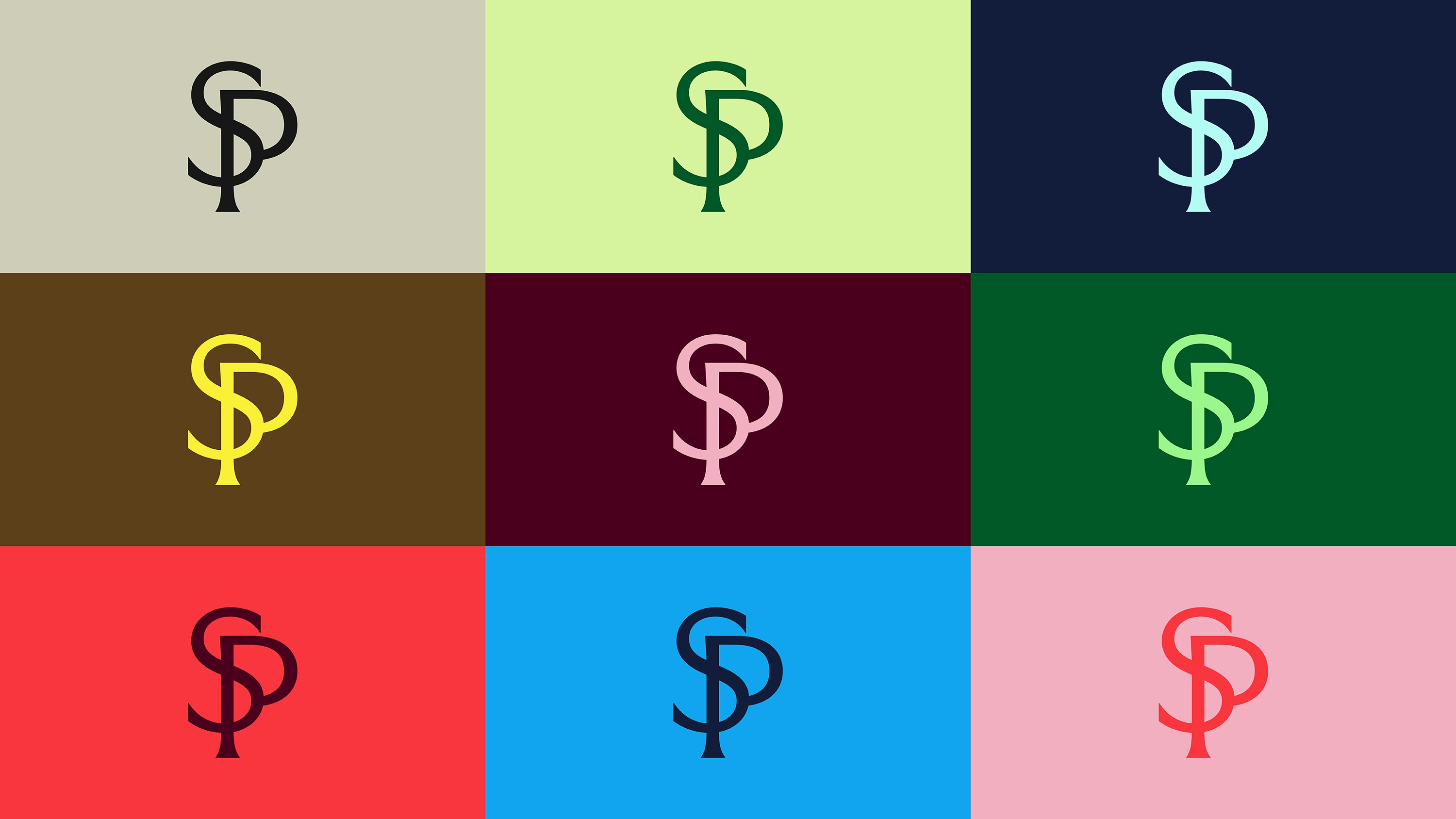
I’m fairly neutral on the monogram – it works, but at times feels a bit Pandora-adjacent, like a budget jewellery brand or a pair of knock-off designer pants, á la ‘Dolce Gusto’, ‘Abibos’, or ‘Channel’. Thankfully though it’s skilfully done, so it doesn’t look cheap, and it does make the whole identity brilliantly flexible and adaptable.
Aside from the wordmark and monogram, Pentagram decided to use Arizona Flare by Berlin-based type foundry Dinamo for the primary typeface thanks to its “unique blend of tradition and modernity… Its elegant, classic letterforms and subtle contemporary serif flares convey a sense of heritage while remaining fresh and versatile,” Pentagram explains, adding that a number of bespoke ligatures were also created to complement Arizona Flare.
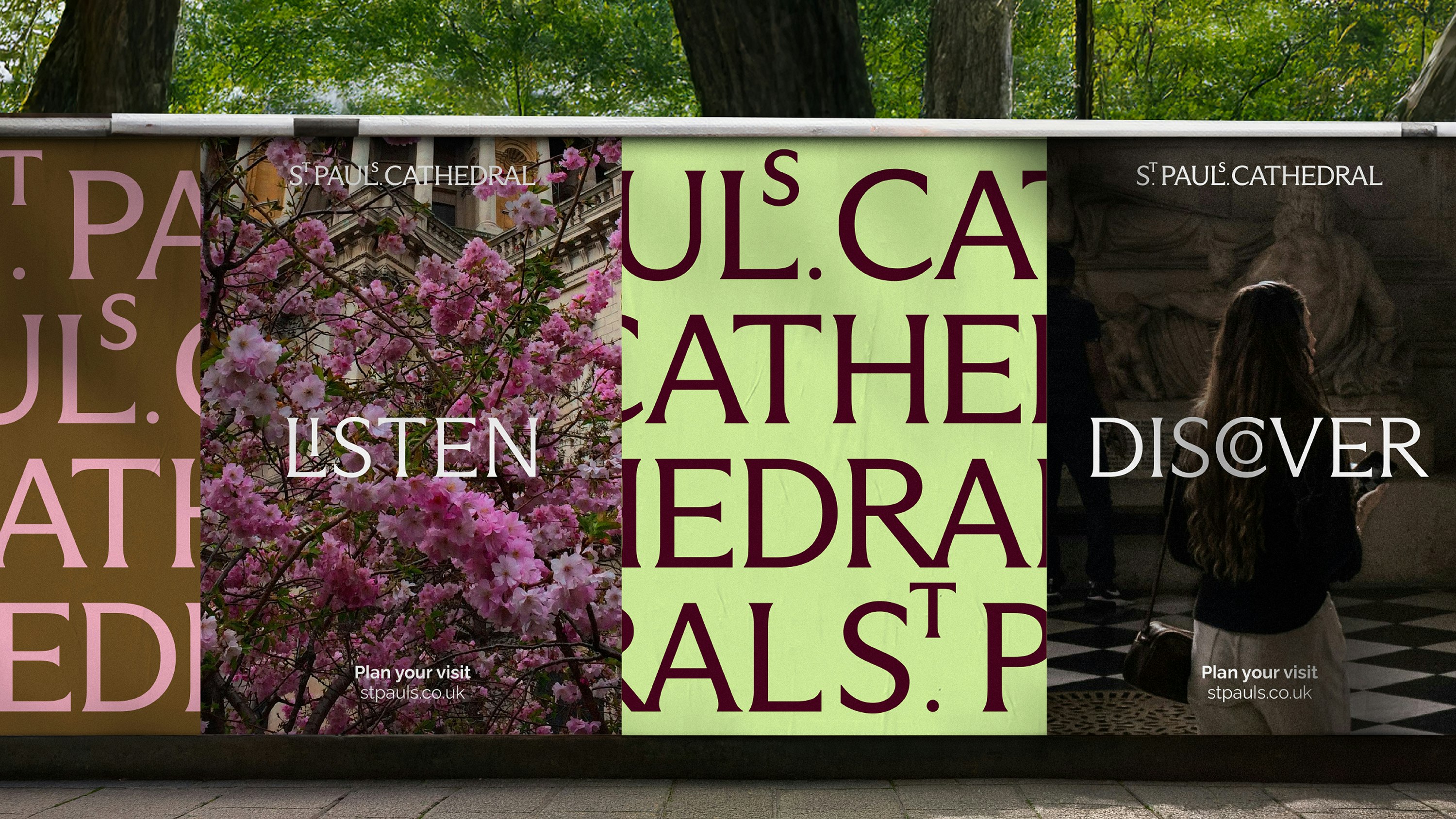
As for the secondary typeface, Pentagram opted to use Raleway across all body copy and subheadings – designed by Matt McInerney, Pablo Impallari and Rodrigo Fuenzalida published by The League of Moveable Type.
It’s not an identity that shouts, that tries to be anything that it isn’t, that reaches too far into modernity: St Paul’s knows exactly what it is, and needed an identity to match – which is exactly what Pentagram’s done here.